Ichigo Kurosaki — Bleach


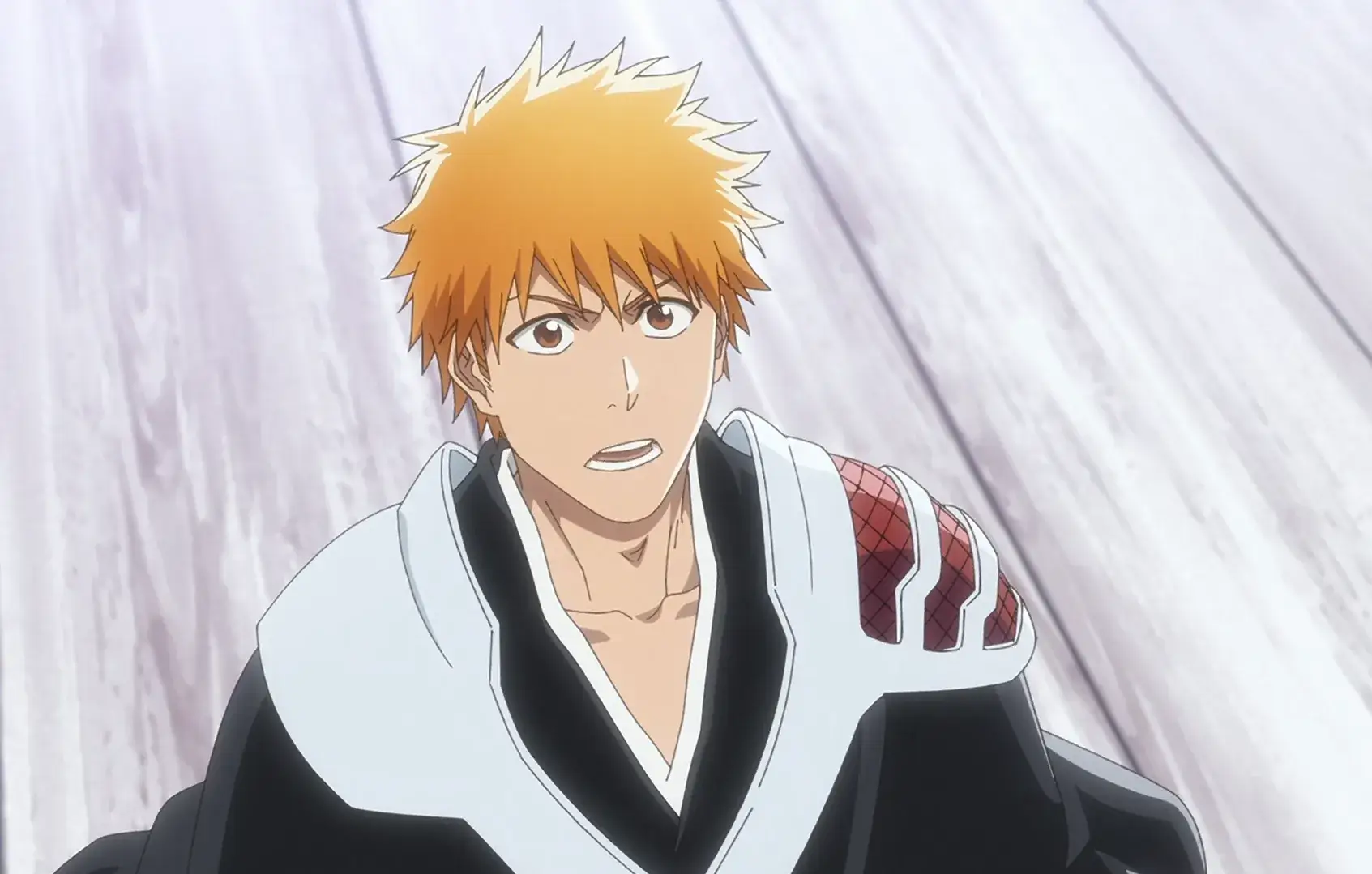


Identity and background
Ichigo Kurosaki is the central protagonist of Bleach, a human teenager from Karakura Town whose life becomes entwined with the affairs of Soul Society after a fateful encounter with Rukia Kuchiki. He is born with very high spiritual sensitivity and the rare ability to see and interact with spirits from childhood. His given name can be read in a way that plays on the word for strawberry and on “one who protects,” a layered pun that telegraphs his defining trait as a protector. He is the son of Isshin Kurosaki, secretly a former captain of the Gotei 13, and Masaki Kurosaki, a pure-blood Quincy whose death when Ichigo was young shapes his outlook and motivation. He grows up above the family’s small medical clinic along with his younger twin sisters, Karin and Yuzu, and he attends Karakura High School. From the moment he gains Shinigami powers, he operates as a Substitute Soul Reaper, bridging the human world, Soul Society, Hueco Mundo, and later the world of the Quincy.
Residence and family
Ichigo lives at the Kurosaki Clinic, a modest but busy household that doubles as a medical practice run by Isshin. The home’s atmosphere is a blend of warmth and chaos, with playful arguments at the breakfast table and dramatic entrances from Isshin counterbalanced by Karin’s deadpan comments and Yuzu’s nurturing streak. Ichigo’s bond with his mother remains a quiet anchor for him; memories of Masaki’s kindness and her death at the hands of a Hollow leave a lasting scar that fuels his need to protect others. Over time he learns the hidden truth of his parents: Isshin’s past as a captain who left Soul Society and Masaki’s Quincy heritage that saved Isshin’s life and later cost her own. In the series epilogue he marries Orihime Inoue, and together they have a son, Kazui Kurosaki, whose gentle disposition masks unusual spiritual potential.
Personality and themes
Ichigo projects brusqueness and impatience, but those edges come from an unwavering protective instinct and a deep, often unspoken compassion. He is neither a thrill seeker nor a conventional hero chasing glory. He acts because someone needs help, because a friend is crying, or because a promise must be kept. He shows little interest in hierarchy or honorifics and will criticize captains, kings, and villains alike if their actions threaten people he cares about. That mix of defiance and empathy defines his relationships with allies who learn to trust his instincts—often before he trusts them himself—and with enemies who underestimate him until they are staring down the black edge of Zangetsu and the compressed hurricane of his reiatsu. A persistent motif tied to Ichigo is rain; in his inner world, rain symbolizes despair, and breakthroughs often come when he learns to silence that rain by accepting himself.
Appearance and design
Ichigo is tall with bright orange hair and sharp, observant eyes, a design that makes him instantly recognizable against the dark palette of Soul Society uniforms. As a human, he typically wears his school uniform or casual streetwear; as a Shinigami, he dons the standard black shihakushō with subtle variations over time. His most iconic silhouette is the sleek black of Tensa Zangetsu’s Bankai form, where a flowing coat and a condensed blade amplify speed and intent. During Hollow manifestations he sports a bone-white mask whose markings evolve, and in his most extreme transformation his hair lengthens, his Hollow hole appears, and his visage becomes a feral, otherworldly figure capable of firing devastating Cero.
Spiritual power and hybrid nature
Ichigo is a unique hybrid: human by life, yet intrinsically bound to Shinigami, Hollow, and Quincy powers. His spiritual pressure is abnormal from the outset, drawing the attention of Hollows and the notice of Soul Society. The Shinigami aspect stems from his father Isshin and from his own natural affinity; the Hollow aspect originates in a proto-Hollow experiment known as White that infected Masaki and then entwined with Ichigo’s essence; the Quincy aspect comes from Masaki’s bloodline. Instead of existing as separate compartments, these forces interweave within him. This hybridization underlies why Yhwach classifies Ichigo as one of the “Special War Powers”: he is adaptable, difficult to predict or suppress, and capable of sudden growth that disrupts carefully laid plans. The interplay of his inner spirits—an “old man” who resembles Yhwach and the wild, white-clad Hollow—mirrors that hybridity: one side methodical and restraining, the other primal and accelerating.
Zanpakutō and inner world
Ichigo’s Zanpakutō is Zangetsu, “Slaying Moon,” and his inner world manifests as a vast city of steel and glass where the horizon flips, trains run through empty rails, and skyscrapers jut at impossible angles. For much of the story, the figure Ichigo calls Zangetsu appears as a calm, middle-aged man in a long coat and sunglasses who speaks in low, patient tones. This “old man” guides Ichigo, tests him, and at times resists him. The other presence is a pale, grinning figure sometimes called Hollow Ichigo or White Zangetsu, who pushes Ichigo to abandon hesitation and embrace instinct. The revelation in the Thousand-Year Blood War reframes these identities: the “old man” embodies Ichigo’s Quincy power and is a manifestation tied to Yhwach, while the white, feral spirit is the true Zanpakutō spirit born from the fusion of Ichigo’s Shinigami soul with Hollow essence. Accepting both voices is what allows Ichigo to wield his genuine blade.
Shikai
Ichigo’s Shikai state appears early as a massive, cleaver-like blade with no guard, wrapped in bandages and slung over his shoulder. Unlike most Shinigami who must learn their sword’s name to release Shikai, Ichigo’s first release is unconventional, reflecting his atypical birth of power and his overwhelming reiatsu. The Shikai channels his signature technique, Getsuga Tenshō, a crescent surge of condensed spiritual energy projected along or from the blade. Over time the Shikai evolves aesthetically and functionally as Ichigo’s understanding of himself deepens, but its essence remains direct: no illusions, no tricks, just explosive transmission of pressure and intent.
Bankai
Tensa Zangetsu, Ichigo’s Bankai, compresses his vast power into a tight, beautifully minimal form: a slender black katana with a unique guard and a flowing coat-like mantle that twines his movements with shadows. Rather than simply multiplying destructive power, this Bankai prioritizes speed, control, and density of reiatsu. Ichigo becomes capable of flash-step bursts that outpace seasoned captains, tight parries against enormous blades, and rapid-fire Getsuga variants that carve through steel and stone. Tensa Zangetsu also synchronizes with his Hollow mask to produce terrifying compound boosts, a combination that lets him battle Espada-class foes on even terms.
True Zanpakutō revelation
In the Thousand-Year Blood War, when Ichigo confronts his lineage, Ōetsu Nimaiya reforges his true Zanpakutō. The result is dual blades that embody the two halves of his soul: one larger, rough-edged cleaver, and a smaller companion blade, together representing the Shinigami–Hollow core and the Quincy aspect that had long acted as a brake and guardian. With this acceptance, Ichigo stops arguing with the parts of himself that pull in different directions and instead channels their unity. His true Shikai is dual-wielded, and when he manifests his Bankai thereafter, the form reflects that synthesis, combining power, speed, and fine control into a single, purposeful edge.
Hollow powers
Ichigo’s Hollow component surfaces initially as instability—surges of power that warp his blade and erode his composure—and later as a resource he learns to harness. With the Vizard’s help he dons a bone-white mask etched with evolving stripes and horns, each change signaling heightened synchronization and extended time limits. The mask multiplies his speed and striking power, deepens the timbre of his Getsuga, and grants him access to Hollow techniques. At the apex of crisis against certain Espada, Ichigo loses himself to a complete Hollow transformation that displays a Hollow hole, elongated horns, and bestial reflexes. In that state he unleashes Cero Oscuras, a pitch-black beam whose scale matches the despair that triggered it. That monstrous strength comes at a cost he initially cannot willingly pay; only later does he learn to draw on Hollow instincts without erasing his own will.
Fullbring powers
After sacrificing everything to defeat Aizen with a technique that strips a Shinigami of power, Ichigo lives as an ordinary human and confronts the void left behind. The group known as Xcution teaches him to awaken Fullbring, the ability to manipulate the “soul” of objects. Ichigo’s Fullbring centers on his Substitute Badge, manifesting as segmented armor, a short-bladed weapon, and a movement technique called Bringer Light that leaves refractive afterimages. Although adversaries steal this power, Soul Society infuses Ichigo with their reiatsu, restoring his Shinigami state and folding remnants of Fullbring into his kit. Traces remain visible in the form of markings and a cross motif, a subtle reminder that even discarded paths leave fingerprints on who he becomes.
Quincy heritage
Masaki’s bloodline grants Ichigo latent Quincy abilities, including instinctual reishi manipulation and defensive Blut Vene. In several confrontations he unconsciously hardens his body with Quincy techniques, surviving impacts that should have been fatal and piercing barriers meant to keep Shinigami at bay. The “old man” Zangetsu had quietly suppressed Ichigo’s access to Quincy power out of a desire to keep him safe from the destiny that comes with it, a paternal instinct that both protected and limited him. When Ichigo thanks that guardian and asks him to fight alongside—not against—his growth, the dam breaks; Ichigo’s power no longer trips over itself. He walks on reishi as naturally as others breathe, inverts enemy absorption tricks, and resists the rewriting force of the Quincy king through sheer identity. This reconciliation makes him a nightmare opponent for foes who rely on singular systems, because he can answer pressure with the right facet at the right instant.
Signature techniques
Getsuga Tenshō is the heart of Ichigo’s offense, a crescent wave of reiatsu hurled with a swing or released point-blank along the blade. Early on it erupts as raw force; later it becomes a precise scalpel or a layered barrage. Variants appear as cross-shaped discharges or compressed slashes woven into flash steps. Mugetsu is the ultimate technique of the Final Getsuga Tenshō, a one-shot abyssal torrent that envelops the battlefield and seals away Ichigo’s Shinigami powers as a cost. High-speed combat becomes his signature in Tensa Zangetsu, where he weaves in and out of sight, turns parries into counters, and stacks Getsuga into combos. Hollow techniques include masked boosts and, at his most extreme, Cero Oscuras. Quincy defense manifests as Blut Vene and seamless reishi footing in foreign realms. Combined, these pieces let Ichigo pivot between hammer blows and needle strikes, between resilience and surge.
Notable battles across arcs
As a Substitute Shinigami Ichigo races through Soul Society to rescue Rukia from execution, clashing with lieutenants and captains who test his will. His duel with Byakuya Kuchiki crystallizes his growth: he reveals Tensa Zangetsu and forces a noble captain to acknowledge a teenager’s conviction. In Hueco Mundo he storms through Arrancar strongholds to save Orihime. Against Grimmjow Jaegerjaquez he struggles, adjusts, and ultimately wins by embracing the mask without surrendering his heart. The confrontation with Ulquiorra demonstrates the terrifying depth of his Hollow potential; his friends witness a form of him they do not recognize, and the victory feels like a wound. Aizen’s arc ends with Mugetsu, a choice to give up what defines him to close the chapter on an enemy who had outmaneuvered the world. Stripped of power, Ichigo rebuilds during the Fullbring incident and returns not as the boy who used to be strong, but as someone who understands why he fights. In the Thousand-Year Blood War, he invades enemy realms, learns his lineage, sees his Bankai broken and reforged, and confronts the Quincy king with a blade that finally belongs wholly to him. Throughout, each enemy acts as a mirror: aristocratic pride, nihilistic emptiness, manipulative godhood, apocalyptic certainty. He cuts through them not solely with power, but with a stubborn refusal to abandon people.
Allies and relationships
Ichigo’s friendships form his true power base. With Rukia Kuchiki he shares the spark that begins his journey; her stern encouragement and willingness to stake her life for his family teach him what mutual trust means. With Orihime Inoue he finds warmth, earnestness, and resilience; her healing shields not only flesh but morale, and their bond deepens into a partnership that anchors the epilogue. Uryū Ishida, a Quincy whose pride and principles sometimes collide with Ichigo’s directness, evolves from rival to comrade whose arrows fly at his side when it matters. Yasutora “Chad” Sado embodies quiet strength, the kind that stands behind Ichigo without speeches. Renji Abarai shifts from enemy to close ally, a blunt sparring partner who respects Ichigo’s spine. Kisuke Urahara is the mentor with a fan and a razor mind, setting brutal training regimens dressed as riddles. Yoruichi Shihōin pushes Ichigo past his limits with feline grace and unflinching honesty. Even within the Gotei 13, captains such as Shunsui Kyōraku, Jūshirō Ukitake, and later a wary but respectful Byakuya acknowledge Ichigo’s role as a catalyst who cracks stagnation and saves lives.
Rivalries and antagonists
Grimmjow’s violent enthusiasm makes him a perfect foil: he does not hate Ichigo; he wants him at his best. Ulquiorra, steeped in emptiness, forces Ichigo to question what “heart” means. Byakuya’s rigid nobility tests whether Ichigo is a reckless kid or a man who understands the weight of duty; their clash ends in mutual recognition. Aizen sees Ichigo as both a pawn and a curiosity, a variable he underestimates because he believes only in planned evolution. Yhwach views Ichigo as a child of mixed bloodlines whose very existence undercuts Quincy supremacy; their conflict is personal and metaphysical, waged over identity, memory, and the right to choose the shape of one’s power.
Leadership and influence
Ichigo does not command units or draft strategies often, yet people follow him. His leadership is situational and relational: he notices fear and speaks to it, notices despair and slices through it with an action that says, “I’m going first.” He rejects titles yet becomes the axis around which disparate groups align—Shinigami squads, humans with Fullbring, Vizards, even Arrancar who respect strength. His influence is clearest in how he changes institutions: Soul Society loosens ossified rules after encountering a human who breaches their walls for love and friendship, and even Quincy plans wobble because a hybrid refuses to fit any category.
Skills outside combat
Ichigo’s life is not only battles. He studies dutifully despite a crowded schedule of patrols and emergency trips to other realms. He helps around the clinic when needed and keeps a protective eye on his sisters. He is straightforward to the point of awkwardness, immune to many social games, yet capable of surprising emotional insight when a friend is hurting. His observant nature and grounded common sense often provide the first correct read on a situation others complicate. He is also physically athletic, with stamina that predates his supernatural training, and he adapts quickly to new techniques because he learns by doing and by feel.
Moral code and decision-making
Protecting someone in front of him always outranks abstract doctrine. Ichigo will break laws, challenge captains, and cross worlds if that is what saving a friend requires. He rarely gives speeches about ethics, but his choices carve out a consistent line: power is a responsibility; institutions exist for people, not the other way around; and identity is something you choose by how you live. He does not seek vengeance for its own sake, and even when angry he is fundamentally against cruelty. He also owns his mistakes. When he causes collateral harm or loses control, he works to make amends and trains to ensure it will not happen again.
Symbolism and name etymology
Ichigo’s name layers several resonances. Read one way, it evokes “strawberry,” fitting the joke of his orange hair and his family’s habit of affectionate teasing. Read another, it leans toward “one who protects” or “a guardian,” which lands on the thematic bull’s-eye of his arc. The surname Kurosaki can be parsed as “black cape” or “black slope,” imagery that pairs with the black coats of the Shinigami and the visual language of night, moon, and shadow used in his techniques. His Zanpakutō, Zangetsu—Slaying Moon—suggests cutting through the night with a crescent blade of concentrated soul.
Equipment and items
Beyond Zangetsu, Ichigo’s key item is his Substitute Soul Reaper badge, a token that grants him official sanction to operate in the human world and serves as a conduit during the Fullbring period. He also uses a soul candy dispenser to perform body separation when operating in the human world, though he prefers direct interventions. His clothing in Bankai form functions like a spiritual mantle, part armor and part aura, and often gets torn and reformed as battles push him to new thresholds. After his true Zanpakutō is forged, the dual blades are sheathed or carried in ways that reflect his evolving comfort with duality, sometimes with cords or slings that recall earlier bandages.
Limits, weaknesses, and vulnerabilities
Ichigo’s greatest weaknesses track his virtues. He overextends himself to protect others, fights when rest would be wiser, and lets guilt slip past his guard. Early on his Hollow power threatens to devour him when despair cracks his focus. He has gaps in formal techniques compared to career captains—less kido, fewer ritual skills—and he sometimes telegraphs intentions because he refuses to abandon an ally even when strategy suggests retreat. Enemies exploit his protective nature by targeting his friends. Yet as he matures, these vulnerabilities become tempered traits: he learns to regulate the Hollow without erasing it, to use Quincy resilience without surrendering autonomy, and to pace himself in drawn-out wars where reckless valor would burn out too soon.
Post-series status
In the story’s coda, Ichigo builds an adult life that looks ordinary until one notices the spiritual hints. He and Orihime share a home that retains the comfortable clutter of the Kurosaki clinic childhood, and their son Kazui exhibits gentle manners and startling spiritual talent. Ichigo maintains ties with Soul Society and old friends while keeping his feet planted in the human world he always fought to protect. The image of him as a husband and father underscores that his victories were never about thrones or titles; they were about carving out a future where everyday mornings exist.
In other media
Ichigo anchors the animated television adaptation and appears across theatrical films set during or adjacent to main arcs. He charts the emotional spine of those stories, from the quiet guilt of a boy who could not save his mother to the steady assurance of a young man who knows what his sword is for. Spin-offs and specials highlight particular dynamics—his friendship with Rukia, his rivalries with Espada, his uneasy respect for captains who become allies—and games often translate his kit into mechanically satisfying bursts of speed and slashes of compressed moonlight. Across media, the silhouette of Tensa Zangetsu, the cry of “Bankai,” and the arc of a black Getsuga define his presence.
Voice and portrayal
In Japanese, Ichigo’s voice actor conveys restrained heat that flashes white-hot in battle calls, while in English his actor brings a grounded earnestness and dry humor. Both performances emphasize the dual nature of the character: the everyday teenager who argues with his dad over breakfast, and the world-striding fighter who tells a would-be god to get out of his way. The casting choices for his inner spirits complement this, with the calm, paternal “old man” and the uncanny, taunting Hollow providing tonal counterpoints that, when combined, feel like a single complicated self talking to itself.
Cultural impact
Ichigo sits among the signature shōnen leads of his era, recognized worldwide by a blade silhouette as distinct as a logo. His catchphrases and techniques permeate fan culture; the motion of drawing a long black coat across the body before a sudden burst of speed is a shorthand for resolve. What sets him apart is not only power scaling but a thematic throughline that privileges compassion without sentimentality. He makes space for other characters to matter—friends, rivals, mentors, even enemies redeemed by a fragment of shared understanding. In a genre where protagonists can blur together, Ichigo’s hybrid nature and relentless protector’s heart give him a color all his own.
Development through training
Ichigo’s growth rides on brutal, targeted training sequences that double as character studies. Urahara’s methods force Ichigo to unlock Shinigami power by confronting fear of death. Yoruichi’s lessons strip away wasted motion; she teaches him to treat speed as thought rather than legs, to think of flash steps as compressions and releases of intent. The Vizards pit him against his Hollow until he can stare down the grinning reflection and refuse to look away. Isshin throws him into a time-dilated limbo where he learns the Final Getsuga Tenshō by understanding what it means to be the technique, to wear darkness as a mantle rather than wield it like a tool. Ōetsu’s forging session is less hammer and anvil and more truth and acceptance—metal shaped around identity rather than the other way around. Each time, training is not just about numbers; it is about removing excuses.
Interactions with Soul Society
At first Soul Society regards Ichigo as a dangerous anomaly, a human wielding power without sanction, but his actions force a reevaluation. He saves a noble from his own laws, helps end a treacherous captain’s coup, and repeatedly rescues their soldiers as if they were his own comrades. Captains who once tried to kill him later stand shoulder to shoulder with him on foreign sands. He earns the respect of hard cases like Zaraki Kenpachi through honest violence and of traditionalists like Byakuya through stubborn adherence to a personal code that, ironically, honors the heart of what Soul Society claims to protect. By the time the Quincy war begins, even the most cautious leaders factor Ichigo into their plans as a decisive piece.
Balance among realms
Ichigo’s story continually returns to equilibrium: between the human world and Soul Society, between Shinigami and Hollow, between life and afterlife. His interventions avert imbalances that would swallow towns or rewrite cosmologies. He is not a guardian of a single gate; he is a hinge on which multiple worlds swing open and shut. The metaphor of the Substitute badge is apt: he stands in for what institutions cannot reach in time, filling gaps with personal risk. That stance invites abuse by villains who try to make him a lever, but it also inspires allies to grow into their own responsibilities, because Ichigo’s insistence on human-scale value is contagious.
Psychology of the inner world
Ichigo’s inner world dramatizes his psyche: a city scape empty of people, restless rails and towers under drifting clouds, and rain that falls when he doubts. The “old man” asks questions that sound like instructions; the Hollow jeers in a language of hunger and motion. When Ichigo denies one voice, the other overcompensates; when he listens to both, the rain stops and the city brightens. The long arc of his self-acceptance peaks when he thanks the Quincy spirit for protecting him and asks him to fight alongside him. That moment turns antagonists into partners within his soul and folds conflict into harmony. From then on, even under pressure, his blade feels less like a borrowed weapon and more like a part of his breath.
Technique nuances
Ichigo’s Getsuga is often portrayed as a single arc, but its use is more nuanced. He can launch it as a projectile, layer it as a sheath on the blade for power-through-guard thrusts, use it to cancel enemy beams midair, or snap it as a close-range burst that trades range for density. In Bankai, he strings soft steps between micro-getsuga flicks, disrupting enemy rhythm. Masked, he can stack Hollow acceleration onto the already compressed speed of Tensa Zangetsu, a double compression that turns corners into straight lines. His defensive reads are underrated; he parries with flat-edge taps that redirect heavy swings, trusting the density of his Bankai to survive glancing impacts while he repositions for the finishing angle. Quincy reishi control appears as invisible footing in hostile spaces and as passive damage reduction that keeps him in fights long enough to adapt.
 All rights reserved © 2025