Mayuri Kurotsuchi — Bleach

Overview
Mayuri Kurotsuchi is the third Captain of the Twelfth Division of the Gotei 13 in Tite Kubo’s manga and anime series Bleach. A character defined by his uncompromising devotion to discovery, Mayuri serves simultaneously as Captain and President of the Shinigami Research and Development Institute, having seized both posts after the exile of Kisuke Urahara a little over a century before the main storyline. Rather than acting as a traditional military commander, Mayuri wields his position to convert the entire division into a laboratory that doubles as a battalion, blurring the line between warfare and experimentation. From his first appearance he is framed not merely as a scientist but as a mad anatomist whose curiosity overrides any conventional sense of morality. His colorful aesthetic, grotesque modifications, and serpentine speech patterns mark him as an outsider even among the already-eccentric captain class, and his presence inevitably shifts any conflict into a probing vivisection of friend and foe alike. Over the course of the series he functions as both antagonist and uneasy ally, his allegiance tethered only to the pursuit of knowledge.
Despite his villainous mannerisms, Mayuri remains indispensable in crises thanks to his unmatched ingenuity. Whether reverse-engineering Quincy spiritual particles, fabricating emergency cures for novel poisons, or constructing surveillance networks that knit together the Soul Society’s defenses, he routinely provides tools that allow his comrades to survive encounters they would otherwise lose. That indispensability shields him from the full consequences of his atrocities: even the righteous Captains turn a blind eye when his research methods cross ethical lines. The narrative therefore positions him as a commentary on the double-edged nature of progress—his breakthroughs elevate Soul Society’s collective capabilities, yet they come at a price measured in test subjects and hollowed-out corpses. This dichotomy is central to Mayuri’s narrative weight, forcing both characters and readers to question how far one may push the boundaries of science before the cost becomes untenable.
Within Bleach’s cosmology Mayuri personifies the spirit of experimentation taken to its most extreme conclusion. Kubo layers him with thematic resonance: he embodies intellectual hubris, the mechanization of the body, and the horror that arises when curiosity is divorced from empathy. Even as later arcs introduce antagonists whose power eclipses his own, Mayuri’s relevance only grows because information becomes the rarest commodity—each successive war hinges on who can analyze, adapt, and out-invent the opposition fastest. Consequently the Captain’s laboratory becomes a stage on which existential threats are dissected, cataloged, and neutralized, cementing his narrative importance long after his initial antagonistic role evaporates.
Physical Appearance
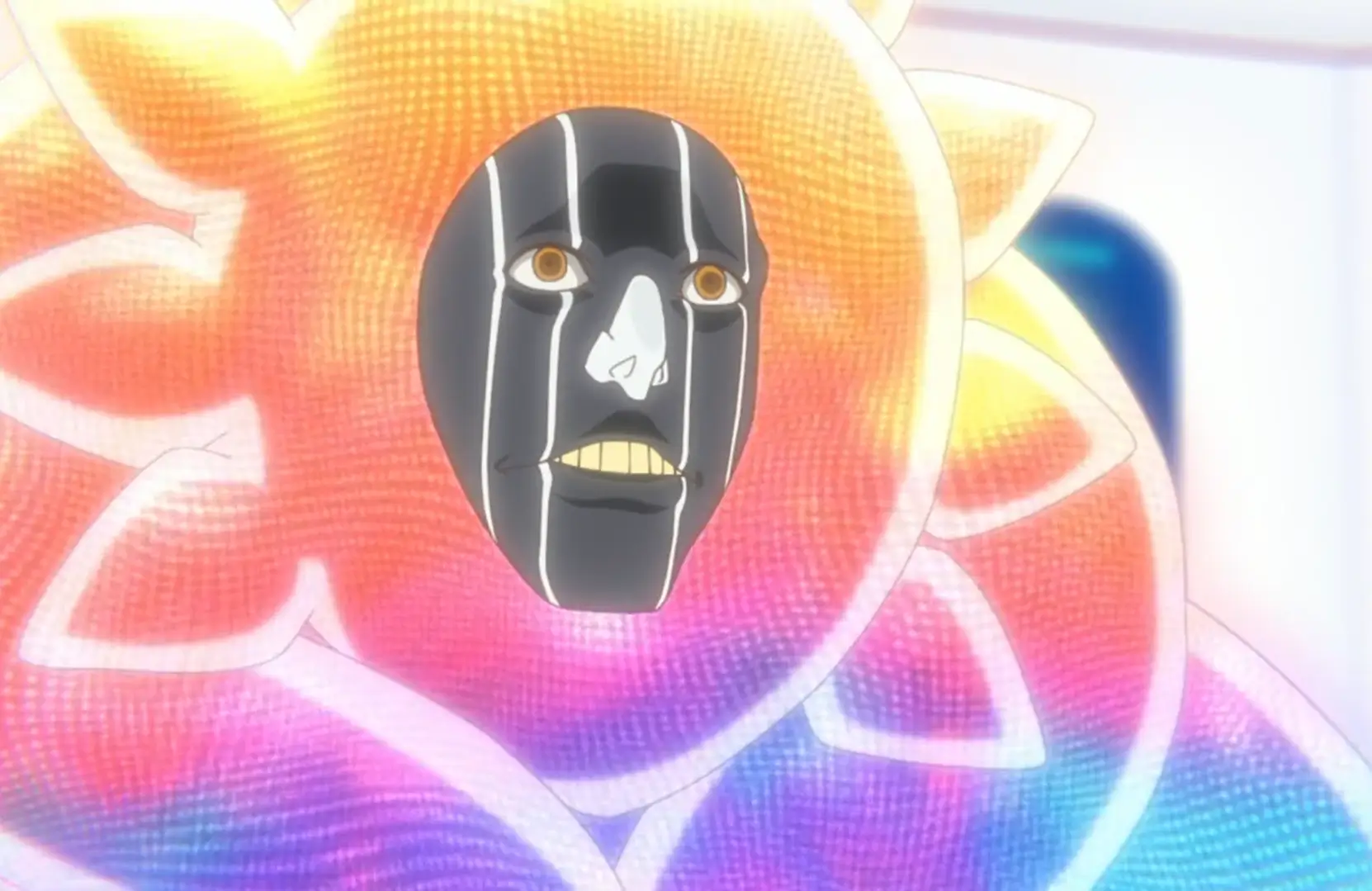
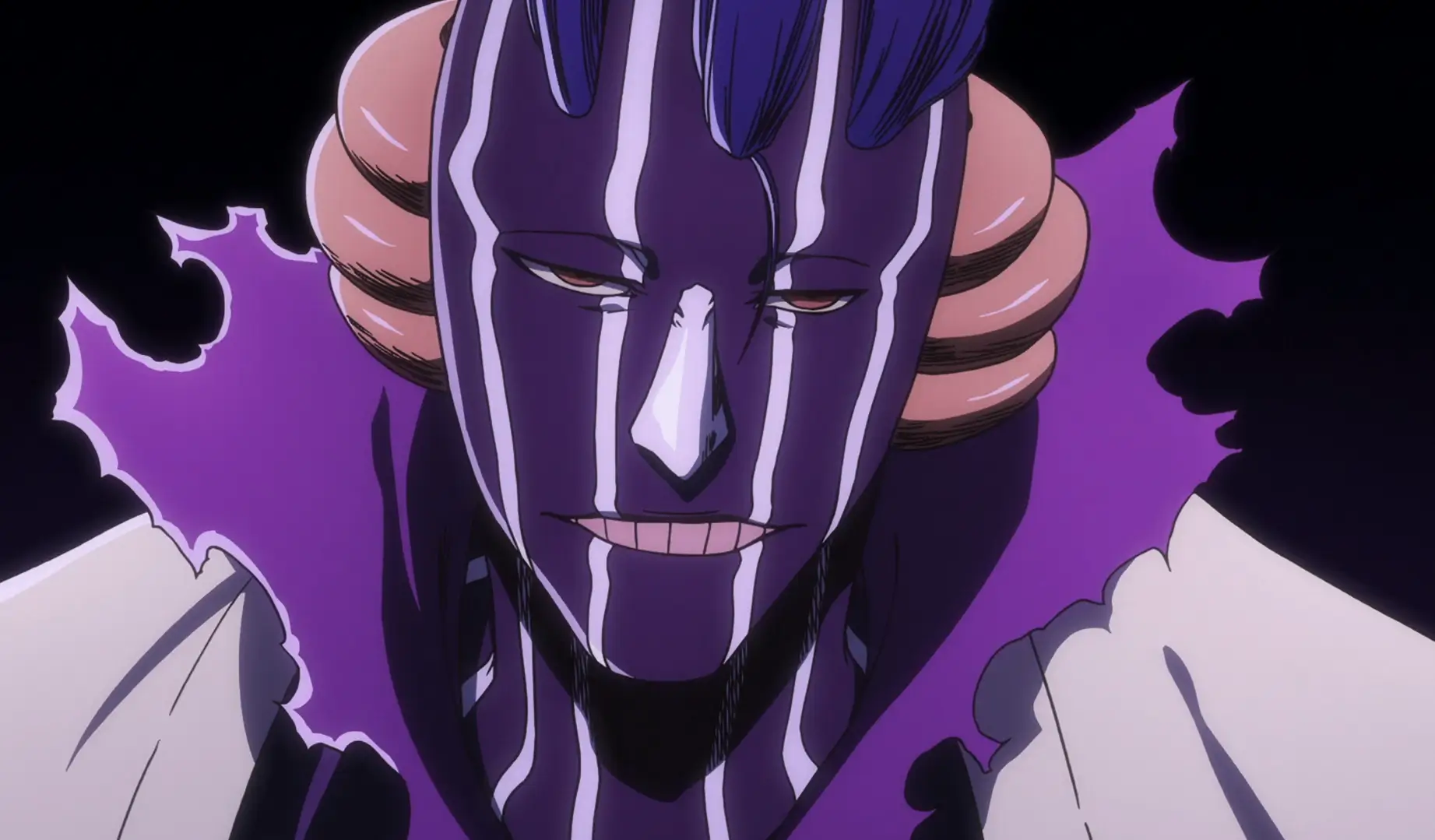
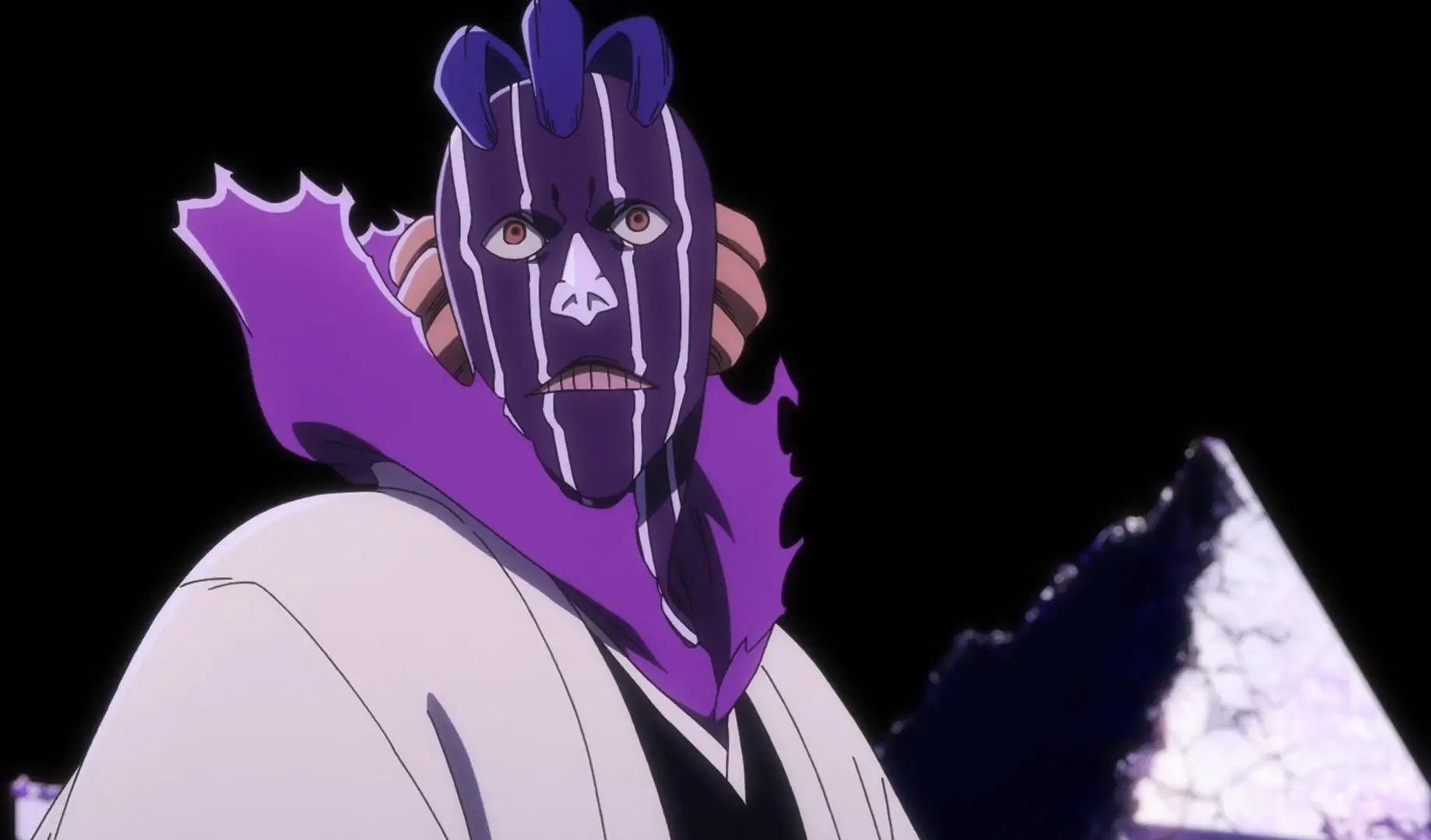
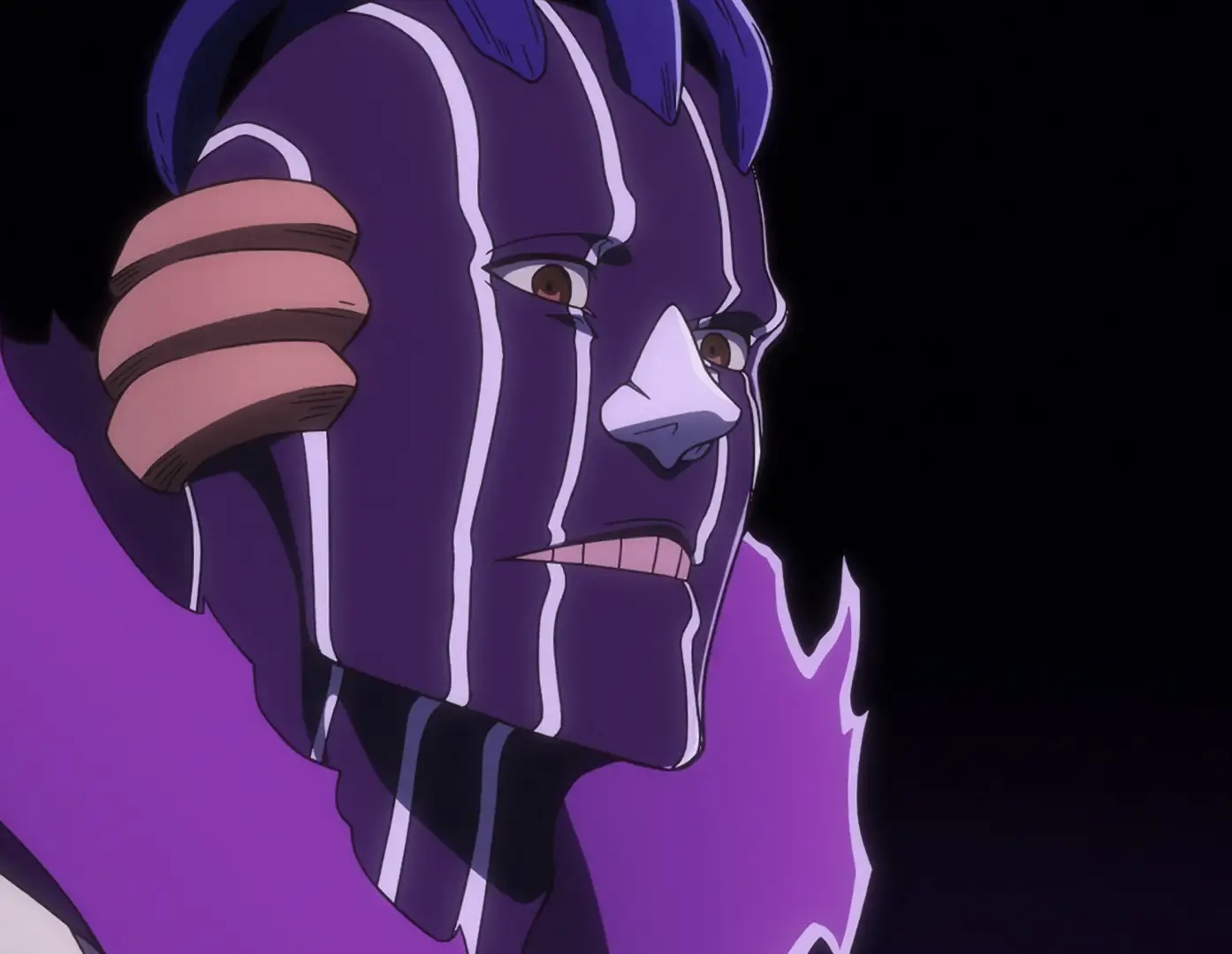
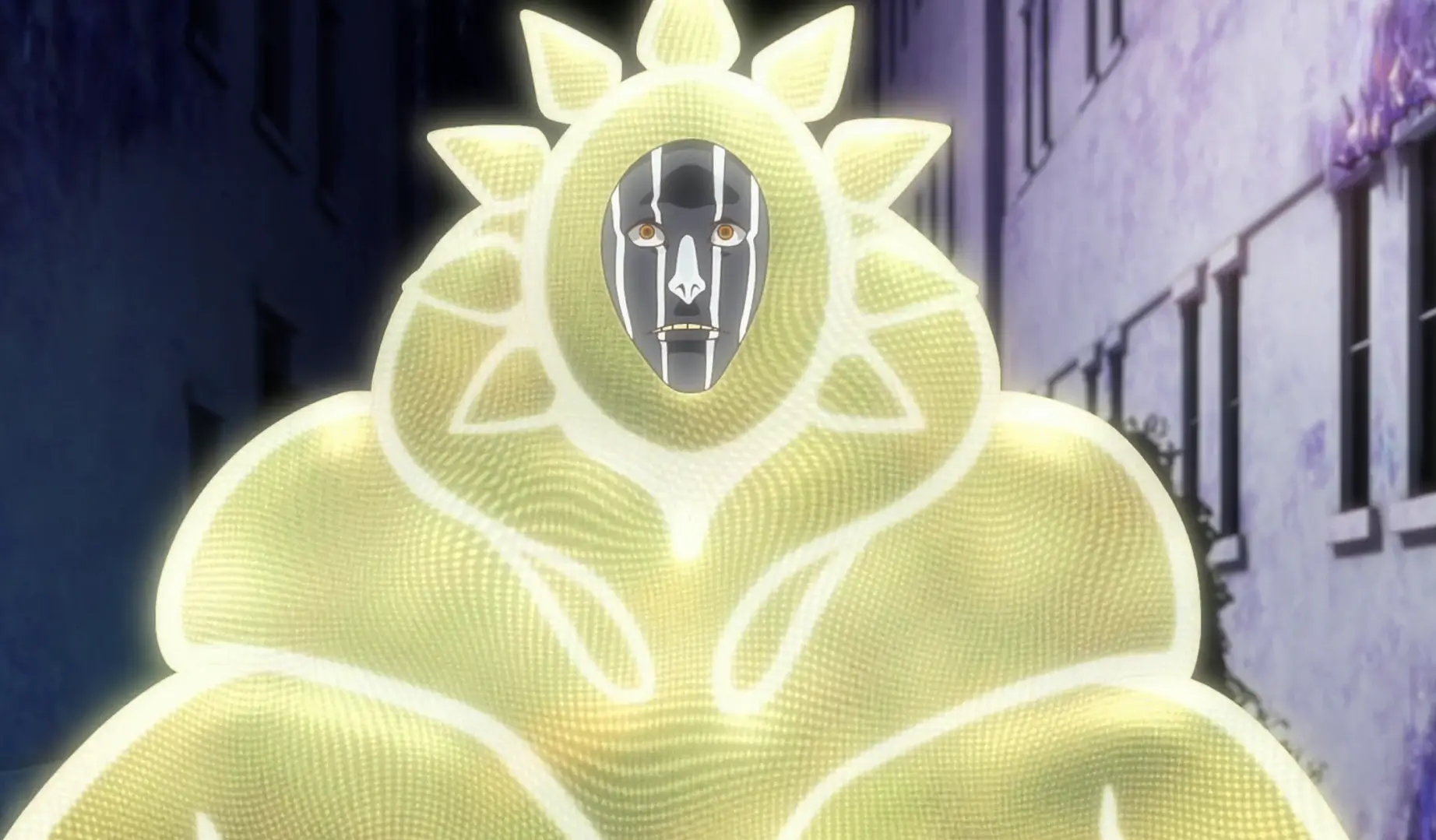
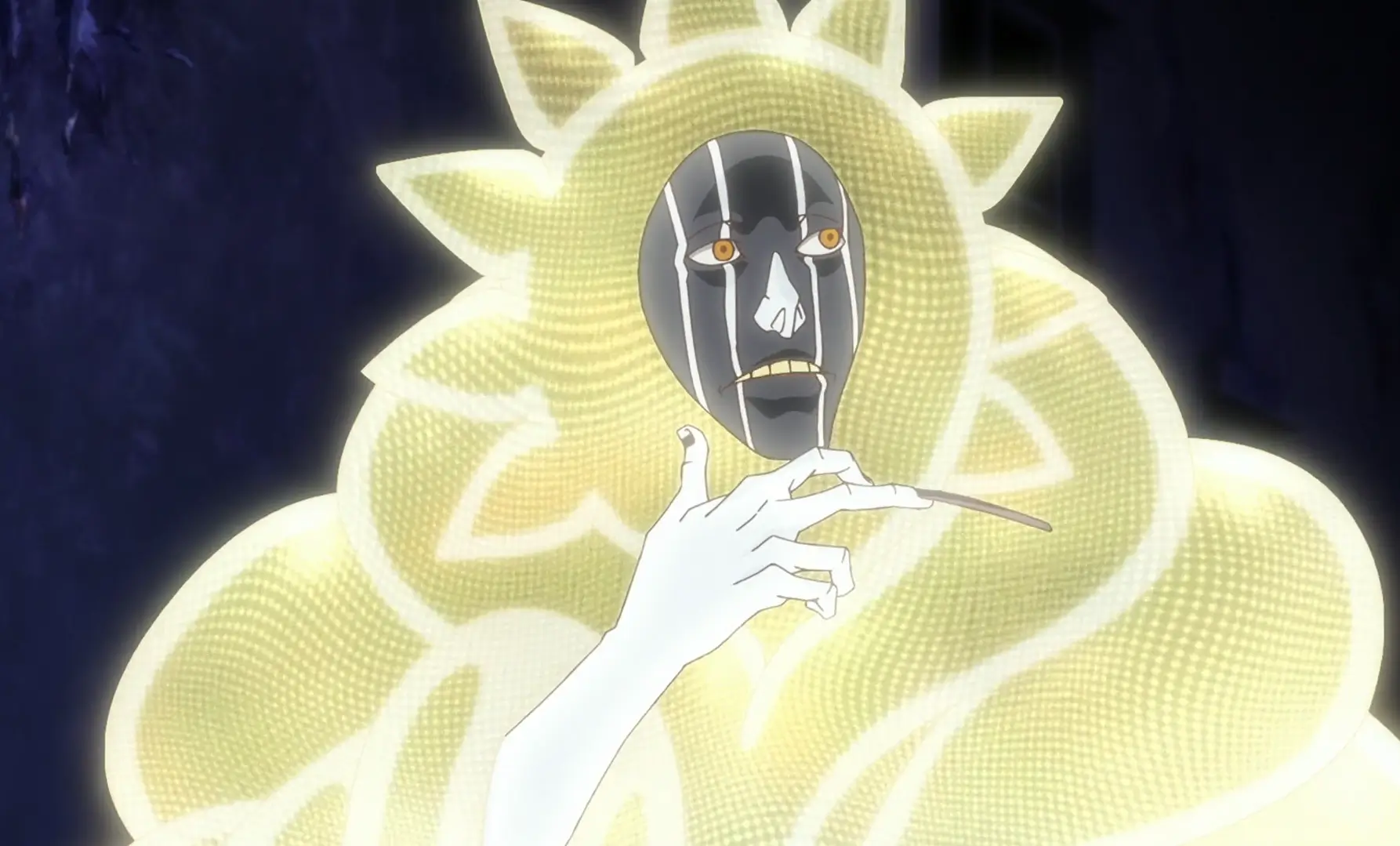
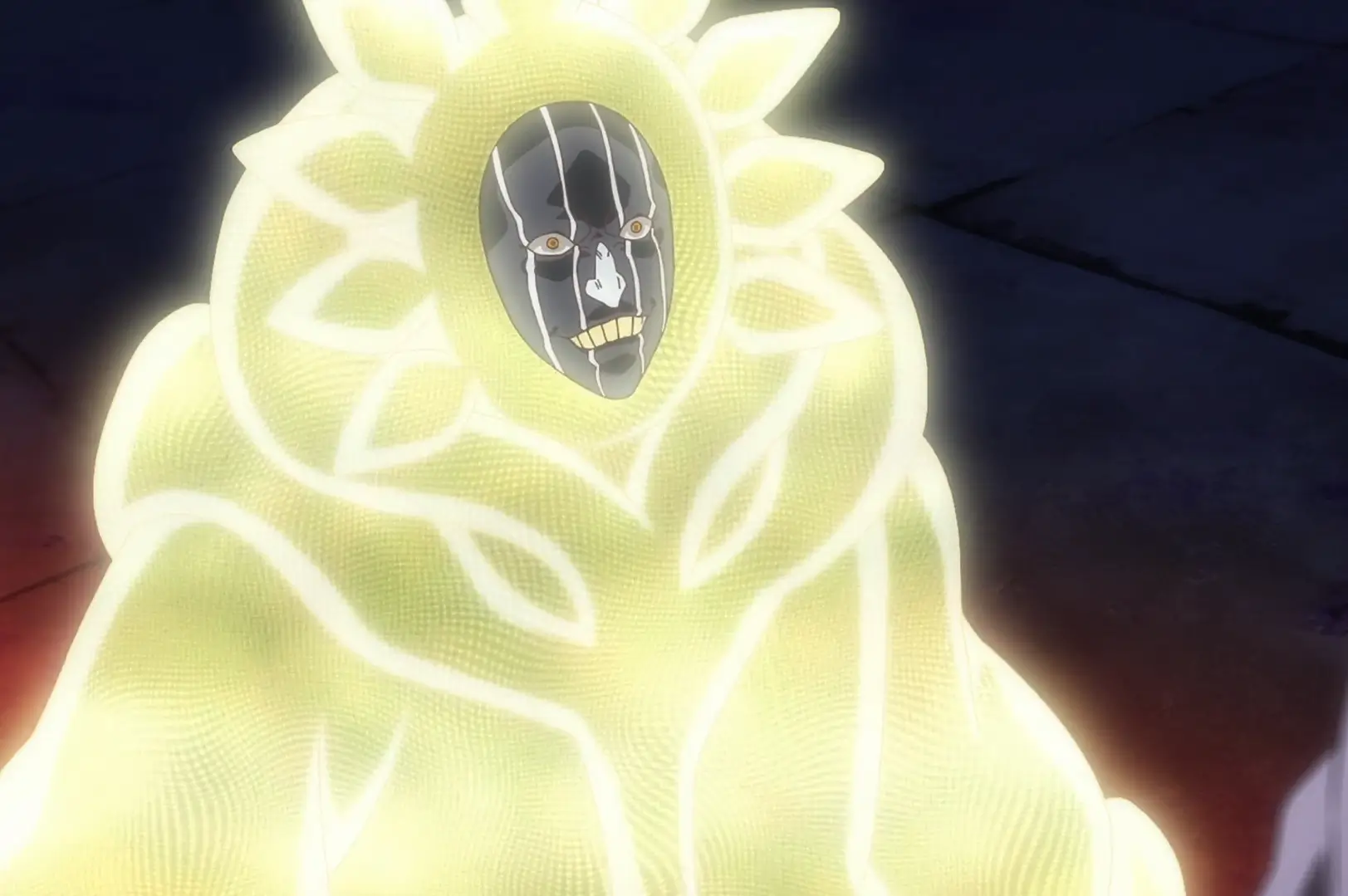
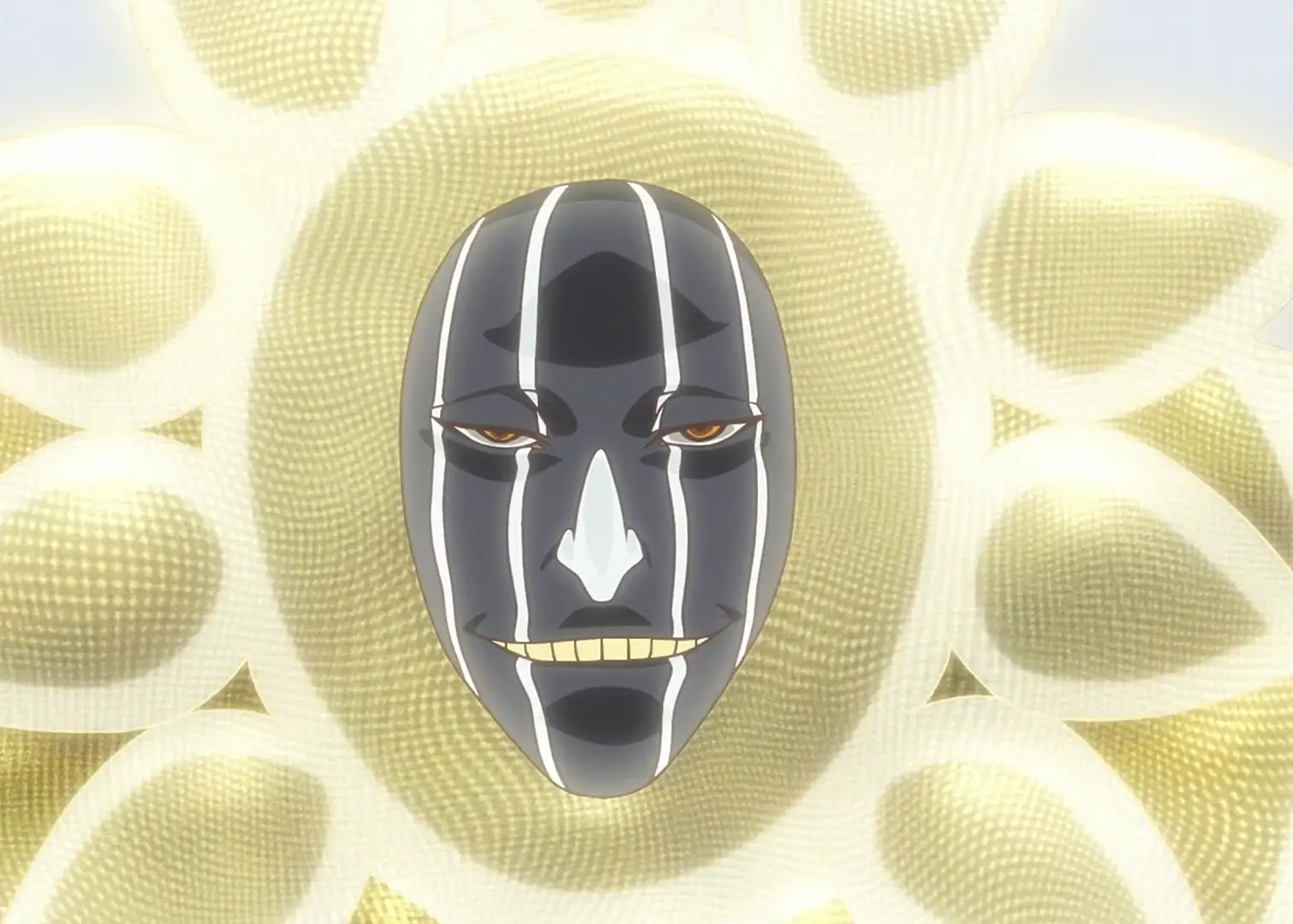
Mayuri’s visual design immediately communicates his otherness. His most recognizable feature is the pallid face paint fashioned into a macabre Noh-like mask: snow-white base, elongated black triangles stretching from brow to cheekbone, and gilded lips that flash like polished metal every time he croons. The black triangles converge on his eyes, emphasizing their luminous yellow irises, while the golden mouthpiece—revealed to be detachable—conceals rows of sharpened teeth resembling surgical scalpels more than human incisors. A conical striped headdress initially adorns his skull, but in later chapters he replaces it with biomechanical skullplates riveted directly into his cranium, illustrating his willingness to treat his own body as a prototype chassis.
Rather than static costume pieces, these modifications change across story arcs as Mayuri refines his body according to battlefield data. By the Arrancar saga he sports ventricular vents along his temples, each opening and sealing to vent experimental compounds. During the Thousand-Year Blood War he upgrades further, embedding a cybernetic ocular assembly on his right side that allows 360-degree perception and the ability to project holographic blueprints into empty air. Every upgrade underscores a commitment to self-directed evolution: Mayuri is unsatisfied with any biological limitation and happily amputates, regrows, or remodels tissue in service of better data acquisition.
Underneath the ceremonial Captain’s haori he wears a sleeveless black shihakushō modified with integrated data cables, injection ports, and spinal conduits. His fingertips are frequently stained indigo from high-density reishi inks, and his tonal palette shifts between alabaster, obsidian, and metallic gold, colors evoking cold laboratories rather than the organic warmth of most Shinigami attire. Collectively these choices render him visually invasive; even at rest his silhouette resembles an operating table’s array of instruments, preparing the reader for the dissection he may perform at any moment.
Personality and Ethos
Mayuri’s psyche orbits a singular star: discovery. Conventional morals bend and snap under the gravitational pull of his scientific hunger, leaving him largely bereft of empathy. He sees individuals as bundles of variables, each organ a puzzle piece; pain is merely a stimulus to provoke new data points. Consequently he speaks in a lilting, sarcastic tenor, punctuating sentences with manic cackles or elongated syllables that drip condescension. Faced with a crying child, he would not comfort but instead wonder how the teardrop’s saline composition correlates with the subject’s spiritual pressure—a callousness so total it feels extraterrestrial.
Yet Kubo carefully prevents Mayuri from collapsing into a one-note sadist by granting him genuine, if twisted, pride and curiosity. He despises sloppy experimentation and holds intellectual laziness in special contempt. When opponents display ingenuity—Uryū Ishida’s Quincy tricks, Szayelaporro Granz’s autopsic counterstrikes, Pernida Parnkgjas’s adaptive nerves—Mayuri experiences ecstasy bordering on lust, extolling them as “splendid research specimens” worthy of exhaustive study. That admiration can pivot to lethal ire when a subject fails to meet expectations, yet the brief moment of awe humanizes him by revealing a dimension of joy that transcends cruelty.
Beneath the flamboyance lies a practical strategist. Mayuri is rarely blindsided twice by the same tactic; every failure is transmuted into a new tool. He epitomizes the iterative scientific method—hypothesize, test, record, refine—applied in vivo on battlefields where the cost of error is death. This outlook generates friction with more honor-bound captains such as Tōshirō Hitsugaya, who balk at Mayuri’s disregard for collateral damage. Nevertheless, his results speak loudly enough that the Gotei 13 tolerates him, mirroring real-world tensions between ethics boards and high-stakes research programs.
Scientific Mind and Role in the Twelfth Division
The Twelfth Division under Mayuri’s command operates less like a martial squadron and more like a sprawling think tank. Laboratories occupy nearly every barracks; officers double as chemists, xenobiologists, and cyberneticists. Daily drills might involve stress-testing gigai prototypes or piloting surveillance drones through Dangai currents rather than practicing swordsmanship. Mayuri encourages a culture where creativity trumps hierarchy: a seated officer who proposes a breakthrough may bypass several ranks overnight, whereas veterans who stagnate risk reassignment to involuntary trial groups.
One of Mayuri’s earliest administrative decisions was to integrate the Shinigami Research and Development Institute directly into routine military operations. Data collected from skirmishes is uploaded to a central mainframe, allowing algorithms to predict Hollow migration, reiatsu strain on medical corps, and technology-weapon compatibility ratios. This institutional feedback loop means innovations translate from petri dish to battlefield in days, sometimes hours—a contrast to the glacial pace of change in other divisions steeped in tradition.
Notable innovations credited to the Research and Development Institute during Mayuri’s tenure include the Reishi Tracking Nanofiber Cloak used by reconnaissance teams, the Giga-Instantaneous Communication Pill that compresses verbal messages into spiritual wavelets, and adaptive restraints capable of withstanding Captain-level kido without sacrificing flexibility. Each project arises from a real tactical deficiency observed in previous conflicts, illustrating Mayuri’s talent for converting empirical observations into engineered solutions. Staff under his command speak of him in hushed fear yet grudging respect; survival odds skyrocket when his inventions are field-deployed, making him a necessary devil.
Zanpakutō: Ashisogi Jizō
Mayuri’s Zanpakutō, Ashisogi Jizō, mirrors its master’s pathological creativity. In Shikai form the blade’s guard blossoms into a golden infant face, cherubic yet grotesque, crowned by three incense-like prongs. Upon activation the sword elongates into a trident spear whose central edge remains razor-sharp while two sickle-shaped side blades curve outward like insect mandibles. The weapon’s primary ability is a neurotoxin that severs motor signals between brain and limbs, causing complete loss of voluntary control while leaving sensory nerves intact. Victims become living cadavers, acutely aware of their immobility, a state Mayuri likens to “a researcher’s dream incubator,” because the patient can witness their own autopsy.
The toxin is notoriously hard to antidote; even Mayuri cannot neutralize it instantaneously, making contamination a risky gambit. However, he mitigates friendly-fire incidents via self-inoculation cycles that render his bloodstream immune, showcasing the depth of his logistical forethought. Beyond paralysis the Shikai can secrete hallucinogenic mists, accelerate clotting to immobilize wounds, and broadcast high-frequency spiritual radiation that disorients Hollows. These secondary features are never explicitly enumerated in canonical databooks yet are implied through his experimental monologues, underscoring Kubo’s tendency to leave room for future narrative escalation.
Importantly, Mayuri engineers artificial release states. He has surgically embedded release triggers in Ashisogi’s hilt, letting him reprogram its functions mid-battle. While other Shinigami may train for decades to deepen resonance with their Zanpakutō spirits, Mayuri takes a scalpel to the metaphysical link, rewriting the sword’s ‘firmware’ like a coder patching exploits. This unique approach redefines the traditional bond between Shinigami and weapon, reinforcing the theme that Mayuri respects principles only insofar as they produce measurable results.
Bankai: Konjiki Ashisogi Jizō and Evolutions
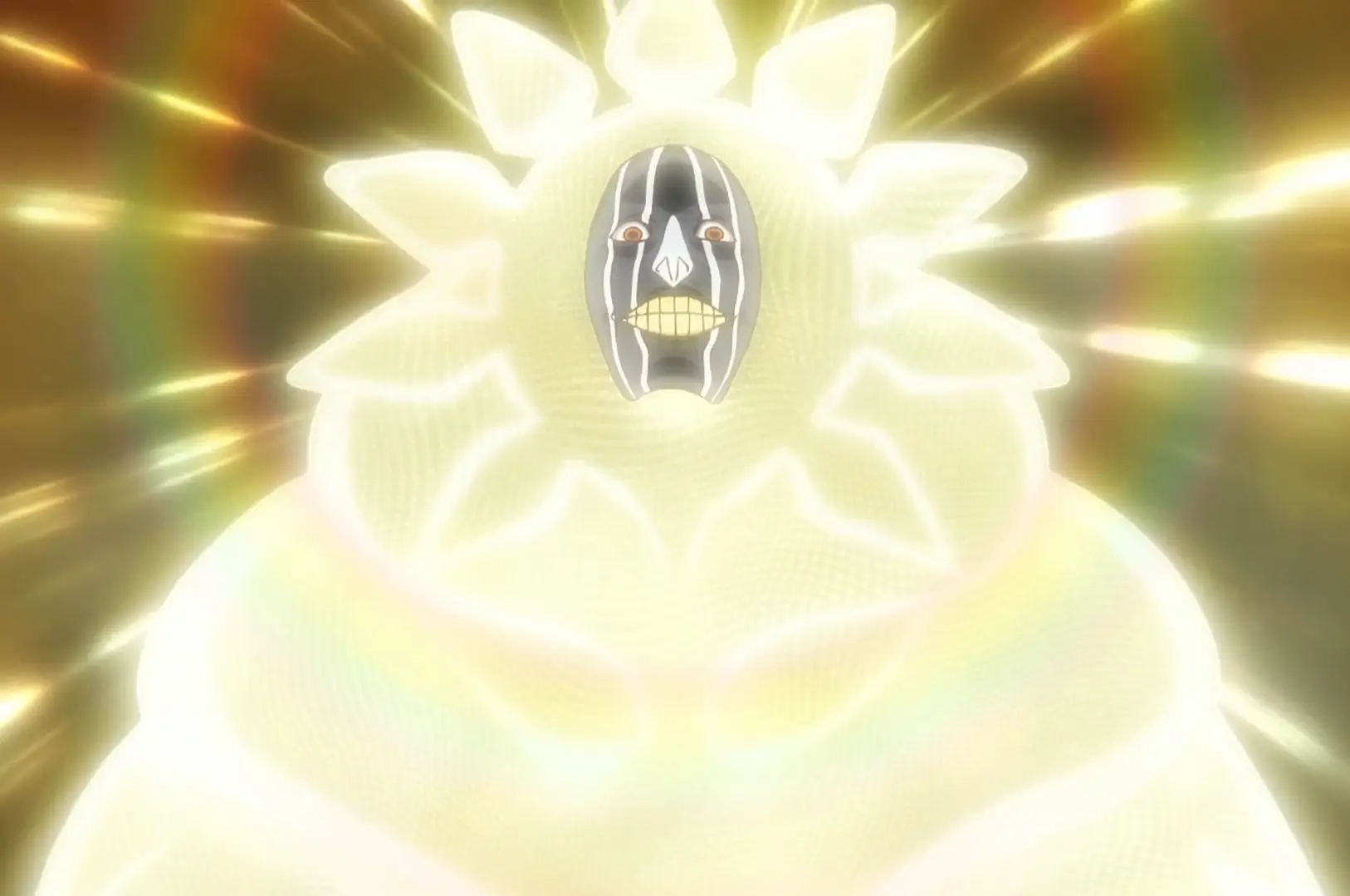
Upon uttering “Bankai,” Mayuri summons Konjiki Ashisogi Jizō, a towering, caterpillar-bodied baby Buddha whose segmented bulk ripples with blue-veined flesh. The creature’s infant head sports golden skullcaps and swollen cheeks, while its midsection sprouts hundreds of blade-tipped legs. From its lotus-like throat erupts a cloud of viridescent poison with a lethality radius measured in city blocks; the toxin’s composition is algorithmically randomized each activation, ensuring no antidote remains valid twice. Mayuri alone survives due to a daily regimen of counter-serums programmed to morph in lockstep with the Bankai’s evolution.
Konjiki Ashisogi Jizō’s physiology is mutable. Mayuri can incubate new organs inside its abdomen, then dissect those organs mid-fight to extract bespoke chemicals. During his duel with Szayelaporro Granz he birthed a larval clone designed to remap Szayel’s neuro-electrical pathways, causing perpetual reactive delay—effectively a living lag switch. Against Pernida Parnkgjas he debuted “Konjiki Ashisogi Jizō: Matai Fukuin Shotai,” a perfected form sporting four knife-flower pods capable of firing remote-controlled embryos that detonate into adaptive acids. Each upgrade follows a post-mortem of the previous battle, proving the Bankai is less a static ultimate attack and more an evolving software platform.
Critically, Mayuri inserted a self-destruct bypass into Konjiki Ashisogi Jizō. If the creature is co-opted by enemy ability, he can liquefy its cellular bonds at will, simultaneously vaporizing its toxin and leaving only inert slag. This failsafe addresses one of the primary weaknesses of giant-type Bankai—turnabout control—demonstrating forward-thinking rarely seen among Shinigami. Even foes who understand the Bankai’s capabilities still grapple with a moving target: every data point gathered during one engagement becomes obsolete by the next.
Combat Record and Strategies
Mayuri’s combat philosophy centers on exhaustive preparation and contingency stacking. Raw reiatsu output interests him less than information asymmetry; he designs battles as variable isolation chambers where each exchange reveals new data. Against Uryū Ishida he deliberately allowed the Quincy to break his arm, using the wound to sample Seele Schneider residue. That sample later informed countermeasures deployed against other Quincy opponents. Similarly, when fending off Arrancar scientist Szayelaporro Granz, Mayuri intentionally subjected himself to Szayel’s voodoo-doll ability to confirm its operational range and rule set before deploying his “pseudo-immortality” drug that trapped Szayel in an infinite loop of time-dilated agony.
He leverages terrain using modular traps: adhesive reishi floors, optical-camo walls that refract kido blasts, and nano-scale sensors that feed biometric data into his visor. If forced into a spontaneous duel, he defaults to misdirection, employing decoy gigai that rupture into hallucinogenic gas. Even death fails to constrain him—he stored a back-up consciousness in a Rechitect Pod, allowing post-mortem remote guidance of the battlefield until the pod could regrow a new host body, a feat showcased briefly in ancillary novels.
While many captains espouse honor, Mayuri champions victory at any cost. He gene-locks his Bankai so that if an enemy steals it—via Quincy Bankai Plunder or other means—it autocannibalizes into useless mush. His uniform is lined with micro explosives rigged to his heartbeat, ensuring any lethal blow triggers a concussive blast that sterilizes evidence. Overkill becomes protocol because incomplete data is, to him, a fate worse than death; a corpse that leaves mysteries unsolved would be an insult to scientific rigor.
Key Story Arcs and Contributions
During the Soul Society Arc Mayuri debuts as an antagonist investigating the Ryōka incursion. His battle with Uryū Ishida exposes Soul Society’s dark history with the Quincy and spotlights Mayuri’s inhumane experiments on those exterminated. Although defeated, he escapes by liquefying himself, later emerging to reclaim his captaincy—introducing readers to his regenerative capacity and indifference toward reputational damage.
In the Arrancar and Hueco Mundo Arcs Mayuri accompanies the expedition to rescue Orihime Inoue. His clash against Espada Eight, Szayelaporro Granz, becomes a cerebral spectacle filled with quantum anatomy and time-dilation drugs. The fight culminates in Szayel’s entrapment inside the Konjiki Ashisogi Jizō’s stomach, where each second stretches into centuries, symbolizing poetic justice as the sadistic researcher becomes the eternally studied.
Within the Thousand-Year Blood War Arc, Mayuri evolves from fringe participant to linchpin strategist. He engineers the Hollowified serum that nullifies Quincy absorption of Bankai, an act that rescues multiple divisions from collapse. Later he confronts Pernida Parnkgjas, the left arm of the Soul King; their duel is a grotesque ballet of nerve manipulation and adaptive viruses. Mayuri concludes by repurposing Pernida’s regenerative tissue into living nerve armor, an upgrade that foreshadows potential post-war technological revolutions. His actions shape the war’s outcome not through raw power but through cascading synergies of invention, antidote, and counter-countermeasure.
Relationships and Interpersonal Dynamics
Mayuri’s bond with Nemu Kurotsuchi, his artificially crafted “daughter” and lieutenant, crystallizes his warped sense of kinship. Nemu is a modified soul engineered from Mayuri’s DNA, designed to be both assistant and test platform. Though Mayuri treats her as property—referring to her as “it” or “prototype”—moments of reluctant concern slip through, particularly when Szayelaporro tortures her or when Pernida’s nerves threaten to erase her consciousness. These flashes of protectiveness complicate his villainy, suggesting that even a personification of ruthless science cannot fully quash paternal instinct.
With Kisuke Urahara he shares both rivalry and kinship. Each sees in the other a mirror over which different ethical filters have been applied. Their conversations drip with passive-aggressive barbs referencing patents, historical failures, and intellectual property theft. Yet they acknowledge mutual brilliance; during the Blood War they collaborate off-screen to stabilize the collapsed Dangai, a task only possible through combined minds.
Other captains view Mayuri with ambivalence. Jūshirō Ukitake advocates vigilance lest Mayuri’s projects spiral beyond control, while Kenpachi Zaraki dismisses him as “the bug man” until Mayuri proposes a steroid that could magnify Kenpachi’s fighting experience, at which point curiosity briefly supplants wariness. These relational vignettes enrich the social tapestry of Soul Society, showing that genius, no matter how unorthodox, finds grudging acceptance when its fruits prove indispensable.
Inventions and Innovations
Mayuri’s catalog of inventions reads like a cross between occult grimoire and defense-industry whitepaper. The Halting-Heavenly-Reflective-Spear is a telescopic needle capable of freezing spirit particles upon penetration, used to immobilize Gillian-class Hollows mid-Garganta transit. The Neuro-Relay Helm funnels battlefield footage directly into the wearer’s optic nerves, bypassing lag inherent in communicative kido. He pioneered the Regenerative Reishi Fabric that repairs shihakushō fibers when soaked in user reiatsu, lowering logistical costs for uniform replacement.
In medical technology he produced the Kaishō Orphan Serums, vials containing stem-cell-grade reishi capable of regrowing limbs. Ironically these benevolent applications grew out of the same research that birthed nerve toxins, underlining the dual nature of experimentation. More controversial is the Nemuri Project, an attempt to breed sleepless combatants whose circadian rhythms are replaced by mod-soul timers—ethics panels remain deadlocked over whether the prototypes violate spiritual rights.
Perhaps his most forward-looking creation is the Reishi Reverse-Osmosis Barrier. Designed post-war, it can sieve malignant reishi clusters from urban Karakura air, reducing the frequency of spontaneous Hole formation and thereby decreasing Hollow birth in the region. Such civilian-scaled inventions hint at a hypothetical redemption arc: if Mayuri’s focus shifts from purely martial enhancements to societal welfare, Soul Society may gain the long-missing infrastructure necessary for sustainable peace.
Themes and Symbolism
Mayuri embodies the Promethean myth recast in a modern laboratory. Like Prometheus stealing fire, he steals forbidden knowledge—vivisection of Quincies, reverse-engineering of Arrancar souls, modification of his own god-given form—and endures minimal punishment because the fire proves too useful to relinquish. Yet, whereas Prometheus suffers eternal liver-eating as divine retribution, Mayuri endures a self-imposed cycle of bodily mutilation, implying that scientific transgression carries inward consequences even when society looks away.
His visual motifs draw heavily from Japanese Noh theater masks, which often depict spirits suspended between worlds. The mask underscores his liminal status: part Shinigami, part machine, part artist, part butcher. The caterpillar imagery of his Bankai references metamorphosis, aligning with his obsession for evolution; however, unlike a natural butterfly, Konjiki Ashisogi Jizō’s metamorphosis is coerced through syringes and gene splicing, illustrating humanity’s attempt to accelerate natural processes without understanding the full ramifications.
Critics also read Mayuri as commentary on wartime atrocities justified under the banner of progress, paralleling real-world historical examples where scientific breakthroughs were built on unethical experimentation. Kubo uses Mayuri to ask uncomfortable questions: Is the salvation of the many worth the torture of the few? Can knowledge be inherently evil, or is evil located in the intent behind application? The series never provides a definitive answer, leaving the audience to grapple with lingering unease long after the final chapter.
 All rights reserved © 2025