Naomi Misora — Death Note
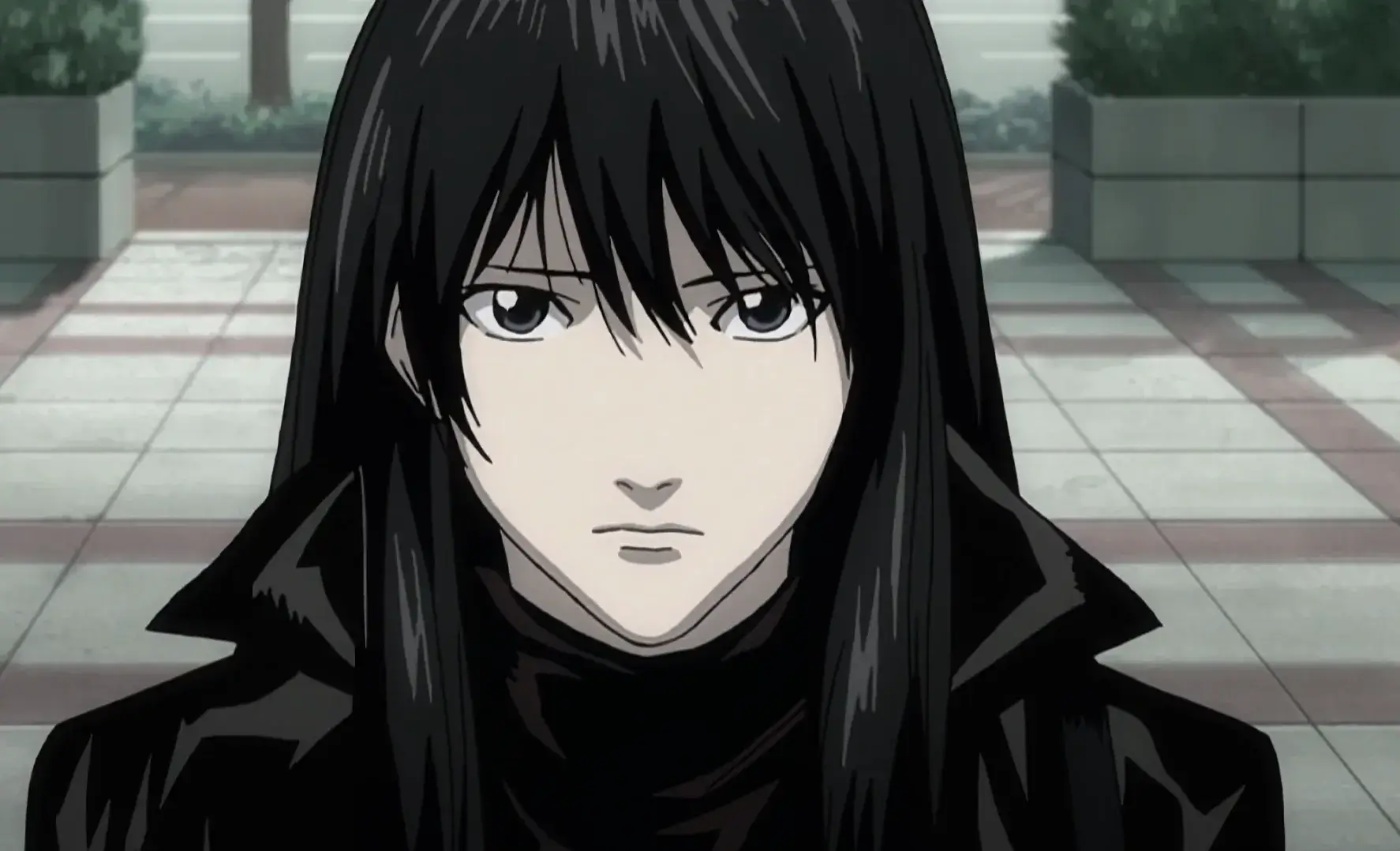


Character Overview
Naomi Misora is a pivotal but tragically brief character in Tsugumi Ohba and Takeshi Obata’s celebrated manga series “Death Note.” Introduced as a former Federal Bureau of Investigation agent, she possesses a rare blend of deductive prowess, emotional intelligence, and field experience that instantly establishes her as one of the series’ most formidable investigators. Although her on-page presence spans only a handful of chapters, her actions exert a lasting influence on both the narrative trajectory and the psychological depth of the principal cast. Her Japanese name is written 弥海砂 in kanji, yet, unlike Misa Amane, she is almost exclusively addressed in romanized form, reinforcing her identity as a globally trained professional whose career flourished in the United States before the series’ events drag her back into the gravity well of the Kira investigation.
Canonical Backstory
Misora’s backstory is explored most thoroughly in the light novel “Death Note: Another Note – The Los Angeles BB Murder Cases.” Prior to the Kira phenomenon, she worked under the legendary detective L on a serial-killer case that tested both her analytic stamina and her psychological resilience. The Los Angeles murders forced her to decode an intricate sequence of crime-scene ciphers, each pointing to the next victim. Her partnership with L was strictly remote, a pattern reflected later when the wider task force never meets the detective in person. Nevertheless, the rapport she built with him in those investigations exposes her to a level of intellectual rigor rarely seen within FBI ranks, legitimizing the faith that L places in her judgement during the early stages of the Kira case.
Physical Appearance and Character Design
Takeshi Obata renders Misora with a reserved aesthetic—shoulder-length dark hair, subtle makeup, and professional attire that eschews flashy patterns in favor of neutral tones. Her posture is erect, conveying military precision, yet her eyes carry a softness that hints at empathy beneath her analytical façade. The absence of overt stylistic exaggeration serves two narrative purposes: it underscores her grounded realism in a series where many characters showcase extreme fashion sensibilities, and it symbolically distinguishes her from the theatrics of Kira’s elaborate moral crusade. Her conservative fashion sense mirrors the meticulous way she approaches evidence, reflecting a life governed by logic rather than spectacle.
Professional Skills and Deductive Abilities
Among the entire FBI cohort deployed to Japan, Misora is arguably the most versatile. Her résumé boasts forensic psychology, multi-lingual proficiency, crisis negotiation, and field surveillance techniques honed through years of covert assignments. Unlike many law-enforcement operatives who rely on teams, she is comfortable functioning autonomously—a critical trait that emerges during the Los Angeles case where she single-handedly interprets cryptographic riddles left by Beyond Birthday. In “Death Note,” these skills resurface when she instantly suspects the bus-jacking incident to be a staged test orchestrated by Kira. Her capacity to detect subtle behavioral tells, such as Light Yagami’s micro-expressions of curiosity versus genuine fear, gives her a sharper edge than the average agent. Furthermore, her intuitive understanding of criminal abstraction—predicting motives that transcend material gain—enables her to probe psychological pressure points that routine investigators often overlook.
Relationship with the FBI Task Force
While most agents sent to Japan are subordinate to Shuichi Aizawa’s liaison network, Misora maintains a slightly different status due to her prior relationship with L. That connection grants her unspoken authority, evidenced when other operatives defer to her tactical suggestions during pre-mission briefings. In practice, she functions as an unofficial field leader, strategizing eavesdropping routes and confirming tail-rotation intervals designed to counter reconnaissance by potential Kira sympathizers. Her leadership style is consultative; she invites input, synthesizes variations, and communicates final orders without resorting to hierarchical intimidation. This collegial approach nurtures loyalty, yet paradoxically deepens the tragedy of her eventual fate—it deprives the task force of a mentor figure precisely when morale teeters under Kira’s escalating body count.
Encounter with Light Yagami
Naomi’s narrative climaxes during her fateful encounter with Light Yagami outside the Sakura TV building. Retired from active duty and driven by concern for her fiancé, Raye Penber, she bypasses standard protocol and undertakes an independent investigation. In that pivotal dialogue, she meticulously recounts the suspicious timeline linking the bus incident, surveillance failure, and Raye’s subsequent death. Light, initially caught off guard, recalibrates his composure and deploys an intricate blend of charisma, pseudo-empathy, and intellectual bait to manipulate her. Misora’s instinctual caution almost saves her—she withholds her true name, introduces herself under the alias “Shoko Maki.” However, Light exploits the brief moment when her guard lowers as she evaluates his offer of collaboration with the task force. By guiding her toward a police annex where no security cameras record the exchange, he isolates her from any institutional safety net, pries her real name through studied conversational pressure, and inscribes it within the Death Note, sentencing her to suicide.
Psychological Tension During the Final Conversation
The verbal duel between Misora and Light is among the series’ finest illustrations of dramatic irony. Readers perceive Light’s internal monologue detailing each contingency plan, while witnessing Misora’s cerebral wheels turning as she cross-checks his advice against her own logic tree. Every sentence she utters, carefully modulated to probe Light’s knowledge, is mirrored by his calculated responses that feign vulnerability—such as referencing police frustration—to evoke her professional empathy. Misora’s downfall stems not from intellectual shortfall but from her unyielding ethical code: she believes knowledge must be shared with legitimate authorities, and thus she allows Light, whom she assumes to be a police ally, to escort her. Ironically, her moral rectitude becomes the lever Light uses to pry open the final layer of secrecy protecting her existence.
Thematic Significance of Misora’s Demise
On a meta-textual level, Misora’s death is a cautionary note underscoring “Death Note’s” commentary on power asymmetry. Where most opponents confront Kira via overt institutional mechanisms—press conferences, public appeals, or armed raids—Misora personifies the lone detective archetype, wielding only intellect and ethical conviction. Her elimination demonstrates Kira’s capacity to neutralize even the most competent individual investigator so long as he secures personal data. This narrative beat reinforces the series’ broader meditation on surveillance culture: information supremacy trumps physical strength. For readers, her absence amplifies suspense by signaling that no character, regardless of competence or past successes, is immune to the Death Note’s devastating reach.
Portrayal in Light Novel Continuity
In “Another Note,” Misora operates as the first-person narrator, offering an intimate lens on L’s methods and the Los Angeles serial murders. Her narrative voice balances professional detachment with nuanced observations about cityscape atmospherics and the psychological profiles of witnesses. Unlike the manga, where panel space constrains internal monologue, the novel affords detailed introspection: she reflects on how her Japanese heritage intersects with her American career, and how cultural friction shapes her interpersonal rapport. Her insights into L’s disguised eccentricities—his cryptic emails that incorporate riddles rather than directives—provide fans invaluable portraits of L’s early investigative style. The novel thus transforms Misora from a supporting casualty into a robust protagonist, retroactively enriching the manga’s depiction by revealing the depth of experience informing her split-second deductions.
Skills Highlighted in the Los Angeles Case
The Los Angeles murders test Misora’s competence across multiple dimensions. She deciphers mirror-writing clues, evaluates forensic anomalies in food residue to ascertain time-of-death, and shoots a padlock off a fire-escape chain in a single fluid motion—demonstrating both cerebral and physical agility. She also persuades local LAPD to grant jurisdictional cooperation by leveraging her FBI credentials, evidencing diplomatic tact. Her dynamic decision-making culminates in confronting Beyond Birthday without backup, defusing a hostage scenario through psychological rapport and accurate threat assessment. These feats corroborate L’s later remark, cited in the manga, that she is “among the finest agents” he has encountered.
Contrast with Other Female Characters
Misora’s role often invites comparison with Misa Amane. Whereas Misa is impulsive and operates on an emotional register, Misora epitomizes structured reasoning. The narrative juxtaposition highlights varied dimensions of female agency within “Death Note.” Misa wields supernatural power in the form of Shinigami eyes, yet repeatedly cedes strategic autonomy to Light. Misora wields purely human skills but maintains strategic independence until her fateful miscalculation. Their trajectories inverse each other: Misa survives yet relinquishes intellectual agency; Misora perishes yet preserves intellectual integrity. This duality bolsters the series’ thematic tapestry concerning choice, autonomy, and moral alignment.
Intertextual Legacy and Fan Reception
Despite limited screen time, Misora commands a sizeable following in fan communities. Fan-fiction archives contain thousands of works expanding her alternate futures—scenarios where she alerts the task force in time, collaborates directly with L, or uncovers Kira before succumbing. Fan art often depicts her wearing a trench coat, evoking classic noir detectives, a visual shorthand for her cerebral archetype. Merchandise is limited compared to primary cast members, yet official art-books feature concept sketches that reveal Obata’s iteration phases: initial drafts showed shorter hair and a bulletproof vest, later discarded for the cleaner civilian profile seen in print. Cosplay guides emphasize neutral palettes and minimal accessories, underscoring her pragmatic nature.
Influence on L’s Strategy After Her Death
Misora’s final phone call to the FBI headquarters, logged moments before she exits the narrative, includes the line “I believe Kira has access to police information.” Although the message never reaches L in time to save her, it corroborates his growing suspicion about data leakage within the task force. Consequently, L deepens operational siloing, restricts debriefs to a hotel suite, and institutes password rotations for digital logs—protocols that become plot staples. In effect, Misora’s critical thinking survives her physical demise, influencing policies that eventually impede Kira’s early momentum. Her analytical ghost thus persists as an invisible advisor guiding subsequent investigative architecture.
Symbolic Reading
Within literary analysis circles, Misora embodies the motif of the “truth-seeker sacrificed to narrative inevitability.” Her skillset suggests she could unravel the mystery if afforded sufficient time. Therefore, the authorial decision to terminate her serves less as condemnation of her abilities and more as an indictment of systemic vulnerabilities—namely, the absence of robust institutional solidarity. In cultural contexts, her portrayal resonates with anxieties over whistleblower safety: individuals who detect malfeasance often lack protective frameworks, rendering them susceptible to hostile forces. By dramatizing this dynamic through supernatural murder, “Death Note” magnifies real-world stakes into operatic tragedy.
Appearances in Live-Action Adaptations
Film and drama renditions interpret Misora variably. In the 2006 Japanese live-action movies, she is omitted, her investigative functions redistributed to an original character named Shiori Akino. The 2015 TV drama reincorporates a character inspired by Misora, renaming her to reflect licensing constraints, yet retaining her role in prompting early suspicions about Kira’s access to police data. Western adaptations marginalize her further, partly due to runtime limitations and culturally specific narrative pacing. Critical reception often laments these exclusions, citing them as lost opportunities to showcase a competent female detective in a genre dominated by male strategists. These adaptation choices have, inadvertently, elevated her cult status; fans frequently petition for faithful inclusion in future remakes.
Detailed Analysis of Investigative Methods
Misora’s methodology merges inductive profiling with pattern analytical modeling. She constructs suspect matrices where variables such as opportunity, motive, and knowledge are weighted through Bayesian inference approximations—techniques she references indirectly when discussing probability tipping points in the Los Angeles case. She leverages cognitive interviews optimized for memory retrieval, such as the PEACE model, to minimize contamination of witness recollections. Her field notebooks, briefly glimpsed in “Another Note,” reveal bullet-point hierarchies where hypotheses are continuously reprioritized based on emergent evidence. This iterative framework foreshadows data-driven policing techniques that gained mainstream attention years after “Death Note” was serialized, lending her approach a prescient quality.
Ethical Framework
Misora adheres to a Kantian perspective where duty and moral law supersede utilitarian shortcuts. She refuses to accept extrajudicial solutions even when bureaucratic inertia hampers progress. During the Los Angeles murders, she rejects L’s suggestion to publicize incomplete profiles to bait the killer, arguing that releasing speculative data risks vigilante violence. This principled stance ascends to tragic irony when Kira, the ultimate vigilante, exploits gaps in institutional procedure to orchestrate her death. Her demise, therefore, underscores the frailty of ethical absolutism in a world where adversaries wield unbridled, unaccountable power.
Legacy Within the Canon
Though seldom referenced by name after her passing, narrative echoes of Misora appear throughout later arcs. Matsuda’s self-doubt over field competence—expressed during the Yotsuba infiltration—parallels Misora’s own critique of standard police protocols. Near’s final address to the press, in which he credits unnamed predecessors who “laid the groundwork for justice,” is widely interpreted by fans as an oblique nod to agents like Misora and Penber whose sacrifices illuminated Kira’s methodology. Her spiritual successor can be glimpsed in Near’s assistant Hal Lidner, whose poise and specialized skillset mirror Misora’s blend of intellectual rigor and tactical acumen.
Fan Theories and What-If Scenarios
Alternate-universe speculations populate forums: What if Misora had joined the Japanese task force earlier? Many theorists posit her interpersonal insight would have accelerated the unmasking of Kira, potentially saving L. Others argue her presence might have altered Light’s risk calculus, compelling him to target her sooner through less conspicuous means, thereby depriving the story of the dramatic alleyway encounter. A popular tabletop role-playing module, unofficial yet widely circulated, casts players as investigators under her command, challenging them to avert Kira’s rise by leveraging collective reasoning before the first televised executions occur. These creative expansions signify the indelible imprint of her character on fan imagination.
 All rights reserved © 2025