Gyokko — Demon Slayer




Origins and Background
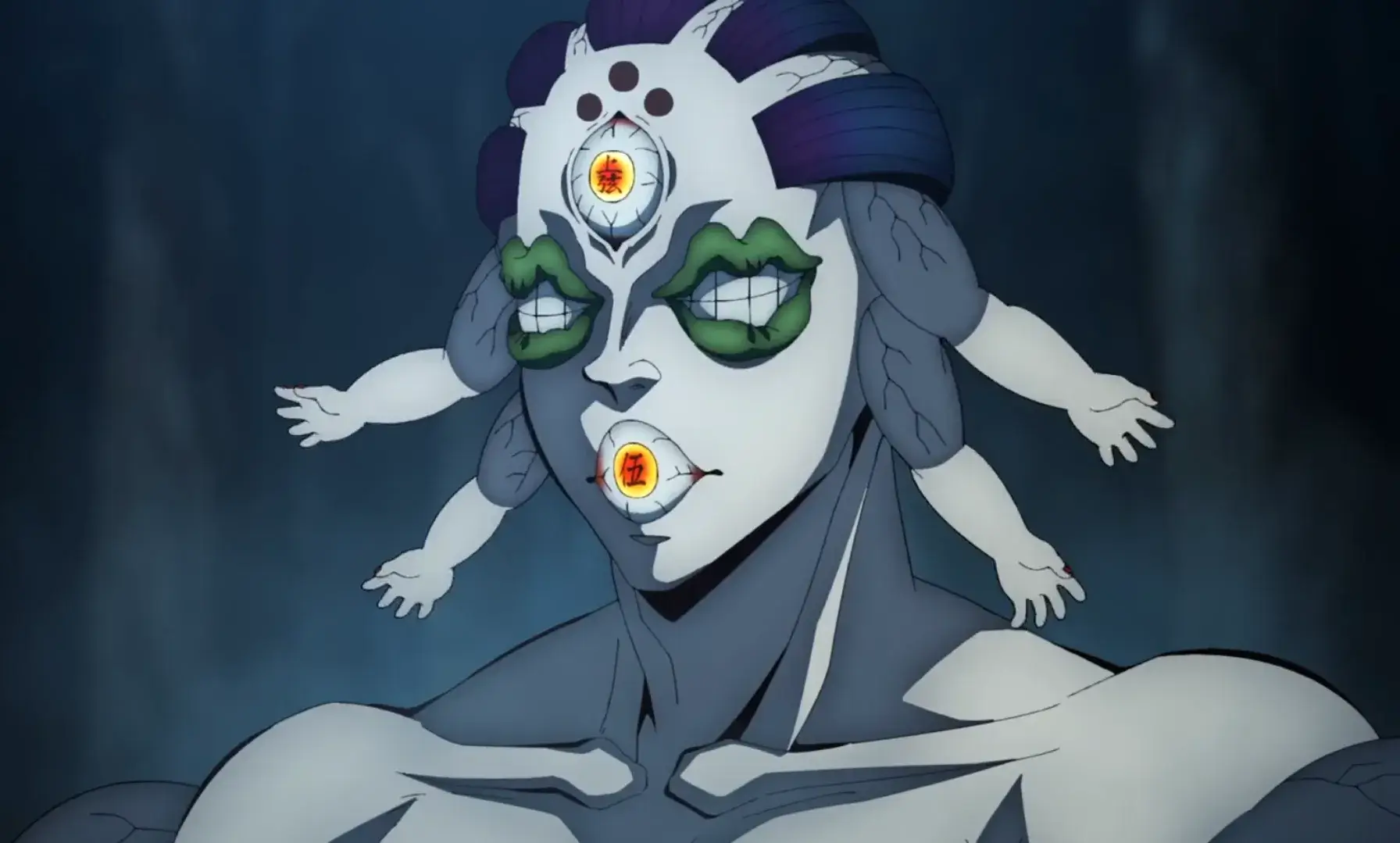
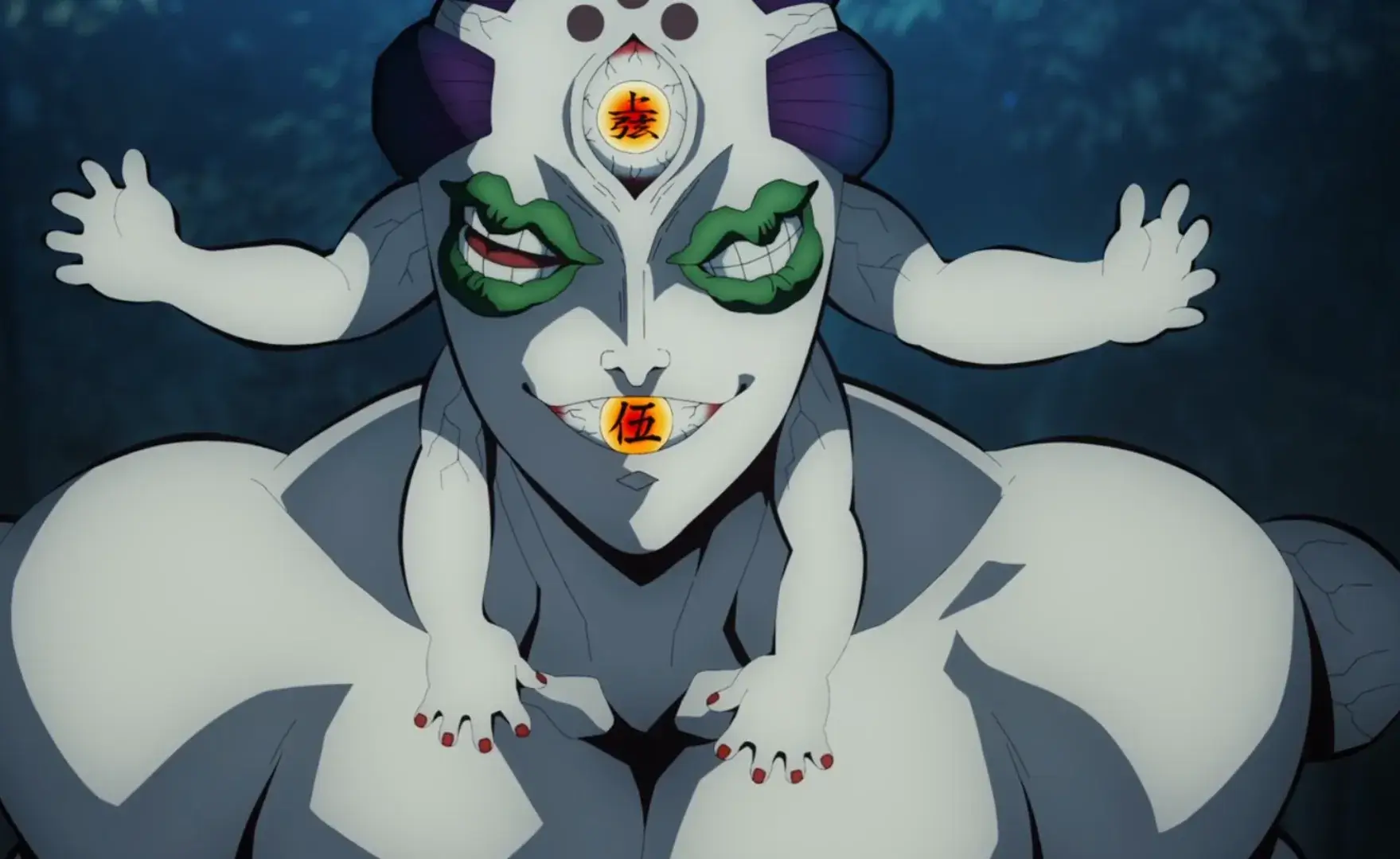
Gyokko is a fictional demon antagonist from Koyoharu Gotouge’s manga and anime series Demon Slayer: Kimetsu no Yaiba. Before transforming into a demon, he was a Japanese boy named Managi who grew up in a coastal fishing village during the late Edo period. Traumatized by the accidental drowning of his parents when their boat capsized, he developed an obsessive fascination with anything that emerged from water—fish carcasses, driftwood, seaweed, and, most grotesquely, bloated corpses. This macabre curiosity isolated Managi from other children and drew punitive reactions from adults, who often beat or ostracized him for his disturbing behavior. The pivotal moment that sealed his fate occurred when he killed a villager who destroyed one of his treasured “specimens.” Fleeing prosecution, he was eventually discovered by Muzan Kibutsuji, who recognized his sadistic streak and artistic eye. Muzan offered him demonic blood in exchange for loyalty, and Managi accepted, becoming the demon later known as Gyokko. Over decades, his murderous impulses evolved into a warped form of artistic expression centering on ceramics and aquatic motifs, ultimately earning him the prestigious position of Upper Rank Five among the Twelve Kizuki.
Appearance and Aesthetics
Gyokko’s design is among the most visually unsettling in the series. His primary body resembles an enormous, elaborately decorated porcelain vase with colorful enamel glazes and intricate arabesque patterns evoking Edo-period Imari and Kutani ware. From the mouth of this vessel protrudes his head, which is framed by fleshy, koi-like fins instead of hair. The head bears multiple sets of eyes arrayed vertically, each iris a swirling mixture of jade green and blood red pigments that convey both hypnotic beauty and predatory menace. A row of needle-thin teeth lines the upper edge of the vase’s opening, giving the impression of a carnivorous flower. When he chooses to emerge fully, Gyokko reveals a serpentine torso covered in iridescent scales that shift color with mood and lighting, reminiscent of abalone shells. Countless infant-sized arms sprout along his body, each ending in delicate but disturbingly sharp claws capable of sculpting clay or shredding human flesh with equal precision. These bizarre anatomical features underscore his status as both artist and predator, turning his own physiology into living artwork.
Artistic Motifs and Inspiration
Gyokko’s obsession with pottery draws heavily on historical Japanese ceramic traditions. His vases display overglaze enamels akin to mid-Edo Kakiemon porcelain, featuring iron-red koi fish, lotus blossoms, and cloud motifs that symbolize transformation and impermanence. He specifically references Jōmon-era cord-marked earthenware when shaping clay coils into grotesque human forms, integrating ancient spiral patterns with nightmarish anatomical distortions. Gyokko also cites the Six Ancient Kilns—Bizen, Tamba, Shigaraki, Echizen, Seto, and Tokoname—as sources of “soulful earth,” claiming that clay from each region imparts unique flavors to his living sculptures. In dialogue, he paraphrases sixteenth-century tea master Sen no Rikyū, twisting the wabi-sabi ideal of “beauty in imperfection” to justify the mutilation of victims whose bodies he encases in glazed coffins. Critics in the real world have noted that Gotouge’s portrayal satirizes the darker side of artistic elitism, exposing how the pursuit of beauty can become a pretext for cruelty when divorced from empathy.
Personality and Psychology
Psychologically, Gyokko blends narcissism, sadism, and obsessive-compulsive artistry. He craves external validation of his “masterpieces” and reacts violently to perceived criticism. Compliments from Muzan or fellow Upper Ranks elicit ecstatic spasms, often causing his vase shell to crack with frenzied delight. Conversely, negative feedback provokes homicidal rage: during the Swordsmith Village assault he attempts to murder Hotaru Haganezuka for “creating superior craftsmanship,” viewing the swordsmith’s talent as competition. Gyokko’s speech oscillates between eloquent art critiques and childish tantrums, suggesting arrested emotional development rooted in his traumatic childhood. He displays minimal empathy, treating humans as raw materials. Nevertheless, he demonstrates genuine pride in craftsmanship, spending hours polishing glaze or adjusting kiln temperatures within his Blood Demon Art to ensure a flawless sheen. This duality—tender care for art, contempt for life—renders him one of the series’ most psychologically layered antagonists.
Position within the Twelve Kizuki
The Twelve Kizuki constitute Muzan’s elite corps, each ranked according to strength and usefulness. Gyokko holds the title of Upper Rank Five, placing him above Gyutaro and Daki but below Hantengu. His promotion followed the execution of a previous holder centuries earlier, after Gyokko delivered a thousand swordsmen’s heads sealed in earthen jars to Muzan as an exhibition piece. The numeric rank reflects combat capabilities, regenerative speed, and utility to Muzan’s overarching plan of demon supremacy. Gyokko’s aquatic versatility and long-range combat edge make him a valuable asset for assaults on fortified locations, which is why Muzan chose him for the mission to destroy the hidden Swordsmith Village. Despite his rank, Gyokko harbors envy toward Upper Ranks Two and Three, particularly Doma’s popularity among demons and mortals alike. He frequently seeks to impress Muzan with increasingly extravagant atrocities to climb the hierarchy, though he never advances beyond his designated position before his demise.
Blood Demon Art: Porcelain Pot Manipulation
Gyokko’s unique Blood Demon Art allows him to conjure, warp, and manipulate an unlimited number of magical porcelain pots connected to a parallel water dimension. These pots act as portals: anything submerged into one can emerge from any other, granting him omnidirectional mobility akin to aquatic teleportation. Within the pots swims a reserve of demonically generated seawater teeming with carnivorous piranha-like fish, each bearing pale human faces that chant eerie lullabies as they attack. He sculpts these fauna from his own flesh mixed with clay, then animates them through blood infusion. Gyokko can also transmute captured humans into glistening living statues by flooding their cells with clay nanoparticles that harden into glossy porcelain while preserving vital functions long enough for exhibition. Another technique, “Water Basin of Hell,” drops titanic jars from the sky; upon shattering, they unleash pressurized torrents capable of eroding stone in seconds. In close quarters, he sheds the vase shell, gaining increased speed and strength, and his scaled arms allow rapid consecutive strikes comparable to a flurry of pottery wheels spinning at lethal velocity.
Biological Adaptations and Regenerative Traits
Like all high-rank demons, Gyokko possesses near-instantaneous regeneration. Severed appendages re-form within moments, glazed over with metallic luster before replicating normal tissue, suggesting that his regenerative matrix integrates silicate and calcite structures alongside demonic cells. His blood chemically resembles ceramic slip, rich in kaolin and demonic hemoglobin, allowing him to secrete self-healing enamel over wounds. Unlike most demons, Gyokko can survive decapitation by momentarily retreating entirely into an intact pot, thereby circumventing the Nichirin blade’s slicing arc. He can also detach his consciousness into multiple vases, functioning as dispersed neural nodes, which complicates attempts to identify a singular weak point. However, exposure to the Sun’s ultraviolet spectrum or a clean beheading while he is mid-emergence overrides these defenses and results in cellular combustion, as demonstrated by Muichiro Tokito’s final strike.
Combat Tactics and Notable Fights
Gyokko favors guerilla strategies that exploit confusion and environmental saturation. He begins encounters by peppering the battlefield with dozens of pots, then assaults opponents from blind spots using his fish familiars. He seldom engages directly until prey is exhausted or psychologically broken by the grotesque displays of mutilated corpses posed as art. During the Battle of Swordsmith Village, Gyokko counters Mist Hashira Muichiro Tokito’s Mist Breathing forms by flooding the area with thick mists of clay dust that obscure vision and clog lungs, effectively negating visual-based sword techniques. He also capitalizes on Tokito’s need to protect civilians, repeatedly targeting swordsmiths to distract the Hashira. Despite these advantages, Gyokko underestimates Tokito’s latent potential. When Tokito awakens his Demon Slayer Mark, his speed surpasses Gyokko’s teleportation timing, allowing a decisive beheading. Another notable skirmish, referenced only in supplementary materials, recounts Gyokko’s duel with a retired Pillar of the Sound Corps two centuries earlier, where he embedded explosive clay pots within a Noh theater ceiling to create cascading debris while showcasing his “opera of ruin.”
Role in the Swordsmith Village Arc
Within the main storyline, Gyokko is dispatched alongside Hantengu to annihilate the clandestine Swordsmith Village, the lifeline for the Demon Slayer Corps’ weapon supply. Gyokko infiltrates by concealing himself in a small pot delivered via a shipment of ore. Once inside, he massacres unarmed artisans, turning them into grotesque “Wheel of Progress” sculptures—human figures bent into rings rotating around a central kiln. His ultimate goal is twofold: deprive the Demon Slayers of Nichirin blades and compete with Hantengu to present Muzan with the most spectacular slaughter. Gyokko’s encounter with Muichiro begins when the Hashira becomes trapped inside a water-filled prison vase whose interior defies conventional physics; volumes behave non-Newtonian, and oxygen dissolves rapidly. Tokito escapes by heating the water using friction-induced steam and adapting Mist Breathing Seventh Form, which generates a vacuous pocket. This improvisation reflects Gyokko’s narrative function: forcing young heroes to evolve. The fight culminates outside the village’s forge pavilion, where Gyokko reveals his true form and begins to overpower Tokito until the Hashira’s mark manifests, flipping the momentum. Gyokko’s decapitation halts the assault on the forges, enabling the Demon Slayers to rearm and eventually repel Hantengu.
Interactions with Key Characters
Gyokko’s social dynamics are colored by artistic hubris. With Muzan, he adopts an obsequious tone, describing his killings as “humble offerings upon the altar of transcendence.” Muzan tolerates but does not reciprocate affection, valuing Gyokko solely for results. In the Infinity Castle meeting following Gyutaro’s death, Gyokko ridicules his fallen comrade’s “grubby entertainment district theatrics,” prompting a cold rebuke from Akaza. Gyokko despises Akaza’s straightforward martial ethos, dismissing it as “primitive kinetic posturing,” while Akaza condemns Gyokko’s victim-as-canvas philosophy. This ideological clash underscores the internal fractures within the Twelve Kizuki. Gyokko’s brief interaction with Hantengu is marked by competitive tension; each vows to outperform the other at Swordsmith Village. Ironically, both perish, illustrating Muzan’s expendable view of even elite demons. Gyokko also crosses paths with Hotaru Haganezuka, a character usually unflappable yet driven to apoplectic fury when Gyokko vandalizes a nearly finished Nichirin katana. Their confrontation contrasts two artists: one creates to protect life, the other to glorify death.
Relationship with Muzan Kibutsuji
Gyokko’s devotion to Muzan borders on religious zealotry. He views the demon progenitor as a patron of the arts, claiming Muzan’s blood is “liquid platinum slip” that elevates clay into porcelain capable of defying mortality. Muzan, however, maintains emotional detachment, praising Gyokko only when utilitarian objectives are met. This transactional dynamic fuels Gyokko’s endless pursuit of more shocking creations, hoping to elicit genuine approval. The Swordsmith Village assignment is both a test and an opportunity: success would cripple the Demon Slayer Corps and potentially allow Gyokko to advance in rank. Yet Muzan offers no direct assistance, highlighting his Darwinian philosophy. Gyokko’s final thoughts upon death circle around the realization that Muzan will never truly value him, adding tragic poignancy to his villainy; he was an artist who sacrificed humanity for recognition that would never come.
Symbolic Significance of Water and Pottery
Water symbolizes life, change, and purification in Japanese folklore, yet Gyokko subverts these connotations, turning water into a medium of entrapment and corruption. His pots function as liminal spaces—thresholds between life and death—echoing the funerary urns of ancient cultures. Pottery itself is an elemental art that unites earth, water, fire, and air; Gyokko’s mastery perverts this harmony, using earth (clay) and fire (kiln) to freeze living beings in eternal torment. The cyclical process of throwing clay on a wheel parallels the Buddhist samsara of rebirth, yet Gyokko’s victims find no renewal, only static horror. This inversion criticizes obsession that ignores the spiritual essence of art. Furthermore, Gyokko’s aquatic portals mirror the mythical Ryūgū-jō palace of sea dragons; whereas Ryūgū-jō is a place of wonder, Gyokko’s domain is a nightmarish inverse. By twisting these venerable symbols, Gotouge emphasizes the thematic dichotomy of creation versus destruction that permeates Demon Slayer.
Real-World Pottery References
Gotouge rooted Gyokko’s craft in real ceramics history. The depiction of overglaze enameling references techniques perfected in Arita kilns during the Genroku era. The sinuous koi designs echo Ogata Kōrin’s “Red and White Plum Blossoms” screen, reinforcing the Edo aesthetics. Gyokko’s double-firing kiln mirrors noborigama climbing kilns introduced from Korean peninsula technology, permitting staggered temperature zones; this explains how he vitrifies clay around living bodies without immediate combustion. His penchant for iridescent glaze draws from the yōhen tenmoku style of Chinese Song dynasty tea bowls, renowned for oil-spot patterns. The melding of Japanese and Chinese ceramic heritage in his art underscores transnational influences while highlighting how cultural treasures can be distorted when wielded by a mind unmoored from compassion.
Voice Acting and Performance
In the Japanese anime adaptation, Gyokko is voiced by Kosuke Toriumi, whose performance oscillates between refined gallery curator and shrill child, capturing the character’s volatile temperament. Toriumi employs distinct timbres: a soft, breathy tone when admiring his own work, and piercing screeches when enraged. For the English dub produced by Aniplex USA, his counterpart is Aleks Le, who modulates between aristocratic lilt and guttural rasp, emphasizing Gyokko’s otherworldly resonance. Sound directors added subtle echo filters whenever Gyokko speaks from within a pot, enhancing spatial disorientation. Foley artists layered ceramic clinks with wet suction noises to simulate his movement, further immersing audiences in his aquatic ceramic horror.
Manga versus Anime Depiction
The anime adaptation by Ufotable expands Gyokko’s screen presence with original sequences absent from chapter 98 to chapter 107 of the manga. Notably, a three-minute montage shows him crafting miniature clay replicas of massacred swordsmiths, foreshadowing the coming attack. Ufotable also accentuates his color palette, applying luminescent shaders to make glaze ripple under moonlight. In contrast, the manga relies on heavy screentone gradients and stippling to convey ceramic texture, leaving coloration to reader imagination. A textual difference includes a manga line where Gyokko recites a haiku about shattered mirrors; the anime replaces it with a metaphor comparing steam rising from a kiln to “souls ascending,” deeming it more accessible to non-Japanese audiences. Despite these divergences, both mediums preserve core characterization and plot beats.
Reception among Fans and Critics
Gyokko’s debut garnered mixed yet intense reactions. Horror enthusiasts praised his body-horror design, citing influences from Junji Ito and Guillermo del Toro. Art historians appreciated the nuanced references to Japanese pottery, prompting academic essays in journals such as Mechademia discussing Gyokko’s blend of fine art and monstrosity. Conversely, some viewers found his grotesquerie excessively disturbing, pushing the boundaries of shōnen demographic norms. Critical consensus lauds his narrative function: a thematic bridge linking tangible craftsmanship (swordsmiths) with perverted artistry, thus sharpening the arc’s focus on the meaning of creation. Merchandise sales of Gyokko figures and scale models were initially slow due to niche appeal but surged after the anime’s Swordsmith Village Arc, indicating that on-screen terror translated into collectible fascination. Cosplayers often cite the complexity of replicating his vase body as a formidable yet rewarding challenge, employing fiberglass and LED-lit resin to mimic glaze iridescence.
Trivia and Lesser-Known Details
Gyokko is the only Upper Rank demon whose name is written using the kanji for “jade” and “pot,” symbolizing both beauty and containment. His favorite human dish, according to the second fanbook, is the liver of potters, which he believes imparts “earthly aroma” to his blood. Early concept art revealed in The Art of Demon Slayer shows Gyokko originally wielding a giant pot-hammer, later scrapped to highlight his magic reliance. In a gag omake, Gotouge depicts him attending an art critique session with Doma, where he storms out after being told his work lacks “moe.” A limited-edition fragrance released by Primaniacs blends sea salt, damp clay, and incense to evoke Gyokko’s presence, marketed with the tagline “Art beyond mortality.” His voice actor Kosuke Toriumi reportedly practiced speaking into ceramic jars to capture authentic resonance. Finally, Gyokko’s defeat marks the first canonical instance of an Upper Rank being slain by a Demon Slayer other than the protagonist group, illustrating the escalating strength of the Corps.
 All rights reserved © 2025