Nami — One Piece





Early Life and Background
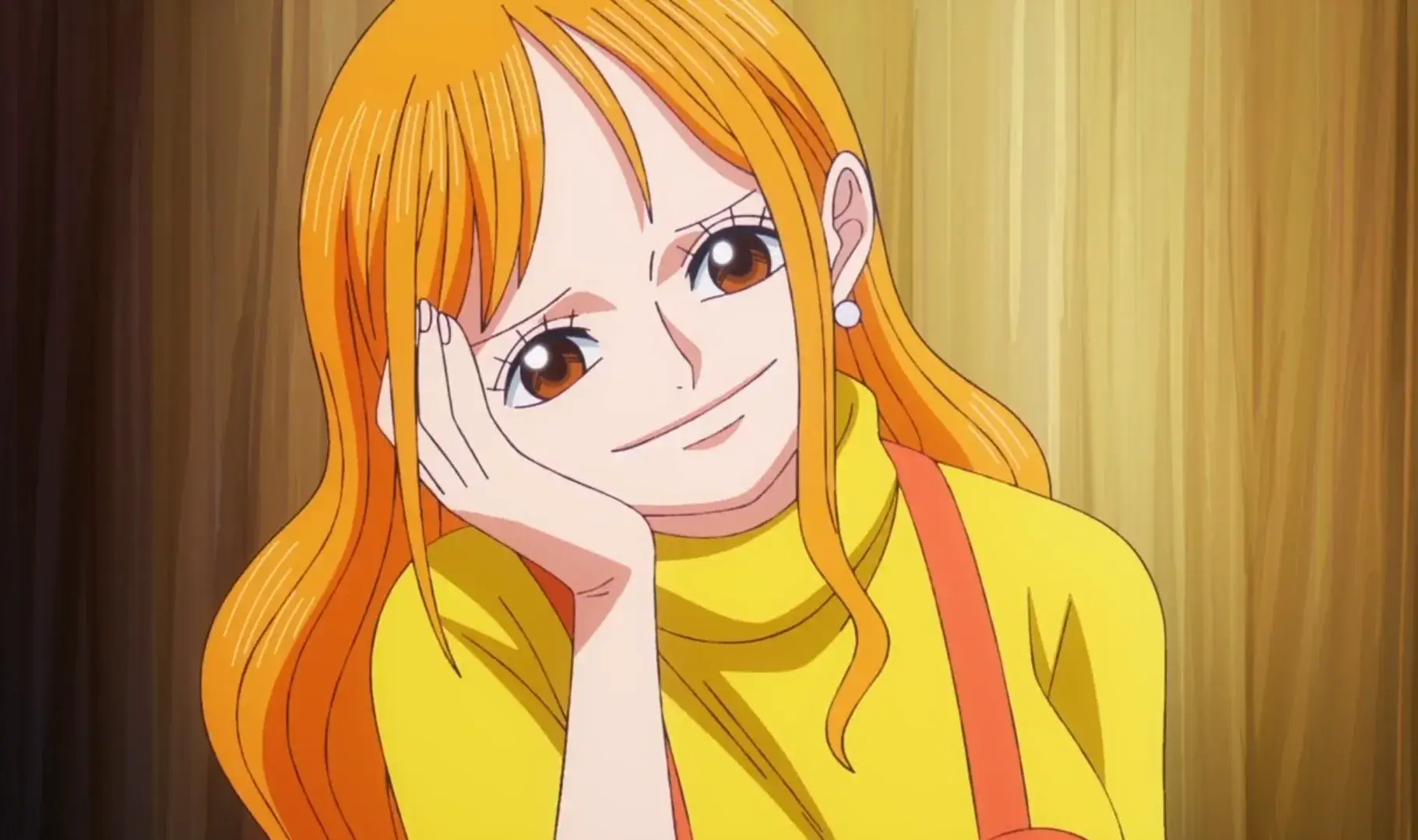
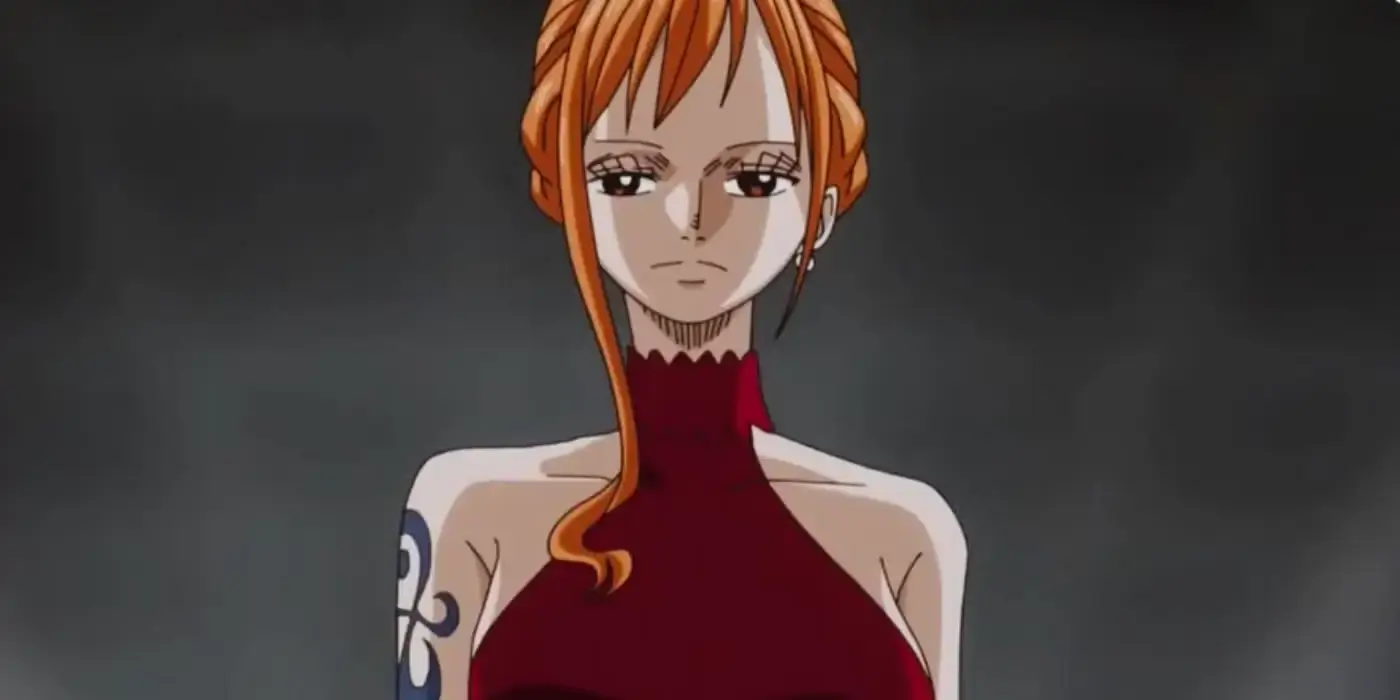
Nami, the indomitable navigator of the Straw Hat Pirates in Eiichiro Oda’s One Piece, was born in Cocoyasi Village in the Conomi Islands of the East Blue. Orphaned as an infant during a pirate raid, she was adopted by the ex-Marine Belle-Mère alongside her sister Nojiko. Growing up poor yet surrounded by unconditional love, Nami learned early to translate adversity into ambition. She poured her fascination with the sky, sea currents, and distant horizons into a childlike promise to draw a complete map of the world. That dream became a lifeline after Belle-Mère’s tragic murder at the hands of the tyrannical fish-man Arlong, who seized the village and forced Nami into servitude as his cartographer. Under the threat that her remaining family would be slaughtered, she outwardly embraced the role of thief and pirate while secretly saving every beli toward buying back her home. Betrayal by both the Marines and Arlong’s crew crushed her hope until Monkey D. Luffy’s declaration of friendship restored it. Nami famously etched her despair into her shoulder, stabbing the Arlong tattoo over and over until Luffy placed his straw hat on her head, symbolizing trust and a fresh start.
That moment of rescue forged Nami’s unbreakable allegiance to the Straw Hat crew and crystallized her narrative arc: from exploited genius to empowered leader. The scars of childhood loss continue to inform her fierce protectiveness toward townspeople and crewmates alike, while the memory of Belle-Mère’s faith fuels her resolve never to let oppression stand unchallenged. Her backstory thus intertwines personal trauma, steadfast ambition, and the broader One Piece theme of liberation from tyranny.
Throughout the series Nami frequently recalls Cocoyasi’s orange groves, the scent of mikan trees carrying a symbolic link to her adoptive mother. She transplanted a small orchard to the Thousand Sunny, ensuring that each sunrise at sea also nurtures the place where her journey began. This fusion of home and voyage embodies her dual identity as both resident of a small village and citizen of the entire Grand Line.
Personality and Values
Nami’s personality is an intricate tapestry of pragmatism and compassion. She is astoundingly money-minded—keeping meticulous ledgers, charging exorbitant fees to freeloaders, and threatening bodily harm when her treasure is endangered—yet she routinely risks her life for strangers oppressed by despots. This apparent contradiction resolves when one recognizes that wealth, to Nami, represents security and agency. Having known destitution under Arlong, she refuses to be powerless again. Her infamous love of beli functions as armor and as a practical resource to fund the Straw Hat dream of freedom.
Morally, Nami sits at the intersection of opportunist and altruist. She can exploit adversaries with swindles worthy of a seasoned con artist, but she cannot tolerate cruelty toward innocents. Her internal compass aligns with a straightforward creed: exploit the greedy, uplift the downtrodden. That ethic is visible whenever she redirects ill-gotten gains to rebuild towns ravaged by pirates, or when she volunteers her navigating skills to save unknown vessels from deadly weather.
Her temper is legendary; even the monstrous strength of Jinbe pales beside the fear she instills with a glare. Yet the rage is rarely selfish—it surfaces when friends gamble their lives foolishly or creditors threaten crew finances. Beneath the fiery exterior lies a nurturing heart: she sews torn clothing, teaches village children about cloud types, and quietly lends Luffy her jacket when he falls asleep on deck. In essence, Nami is a study in paradox: miserly yet generous, stern yet gentle, calculating yet deeply emotional.
Dream of Mapping the World
Central to Nami’s character is her dream of creating a complete and accurate map of the entire globe—a feat no cartographer in One Piece history has achieved. The Grand Line’s ever-shifting magnetic fields, dangerous weather phenomena, and mythic territories like the New World have thwarted generations of navigators. Nami’s ambition demands not only exhaustive travel but also innovation in measurement, recording, and cartographic design. She meticulously notes barometric pressure, ocean salinity, celestial movements, and even Sea King migration patterns, translating raw data into charts of staggering precision. Each new island adds another stroke to her magnum opus, propelling her forward through perils that would deter less devoted explorers.
Unlike Luffy’s dream, which culminates in a single destination, Nami’s goal is an ongoing scholarly quest. Every unpredictable current is an unsolved equation; every sky island is a missing puzzle piece. Her dedication highlights a softer facet of the Straw Hat ethos—freedom through knowledge. In the narrative, her maps stand as tangible evidence that exploration can transform the unknown into the known, giving hope to seafarers who follow in her wake.
Importantly, Nami views the dream not as solitary achievement but as a gift to the world. The day her atlas is complete, countless future sailors will navigate safely, trading flour and medicine instead of cannon fire. Thus her ambition marries personal fulfillment with humanitarian benefit, reinforcing One Piece’s theme that individual dreams, when pursued with integrity, can uplift society.
Navigation and Cartographic Genius
Nami possesses what Dr. Vegapunk might call a “preternatural climatological instinct.” She senses barometric fluctuations through subtle changes in air density on her skin; she predicts currents by observing cloud morphology; she reads bird flight patterns as barometers for approaching squalls. These innate talents, combined with rigorous study of log poses and historical weather logs, render her virtually unrivaled at sea. Even veteran Grand Line captains consult her expertise, acknowledging that a misjudged eddy or King Sea fog bank can spell instant doom.
Her cartographic process integrates analog tools—compasses, sextants, and protractors—with inventions that push nautical science forward. She calibrates the Straw Hats’ log poses at double the normal rate by synchronizing them with kinetic ring sensors attached to the mast, thus shortening waiting times on magnetic resets. On sky islands she drafts three-dimensional maps using layered vellum sheets, capturing altitude differentials and wind tunnels that ground-level charts ignore.
Nami’s professional pride manifests most clearly aboard the Thousand Sunny. Every sunrise finds her at the chart table, updating reef coordinates and margin notes. She catalogs local myths because folklore can contain navigational clues—a practice vindicated when a legend about “singing whirlpools” revealed the hidden entrance to Fish-Man Island. When Franky upgrades the helm, she provides precise torque specifications to harmonize rudder response with anticipated tidal shear. Thus the Sunny itself becomes a mobile research station, accelerating her dream.
Combat Abilities and Weapons
Though not a brawler in the mold of Zoro or Sanji, Nami has evolved from dagger-wielding thief to formidable climate warrior. Her early strategy relied on deception, ambush, and the environment—snatching keys, turning enemies against each other, or dropping objects from heights. Over time she recognized that survival on the Grand Line required direct offensive capabilities, leading to the adoption of the Clima-Tact, a weapon blending sorcery and science.
Nami’s combat style hinges on misdirection and control. She creates fog banks to blind snipers, crafts mirages to split her image into decoys, and manipulates humidity to generate lightning bolts with pinpoint accuracy. Rather than overpower opponents, she exploits weak points—metal armor that conducts electricity, slippery decks that induce falls, or cognitive overload from sudden barometric shifts. Her resourcefulness enables her to defeat foes whose raw strength far exceeds her own, such as the CP9 assassin Kalifa in Water Seven or the Numbers brute in Onigashima.
Her agility and intelligence complement these techniques. She dodges with dancer-like footwork that belies training in cartography: years spent traversing uneven terrains for survey data cultivated balance and spatial awareness. When collaborating, she syncs attacks with Luffy’s Gear Fifth elasticity to amplify impact, converting his stretching limbs into lightning rods timed with her Thunder Lance Tempo. Consequently, Nami embodies the archetype of a tactical mage, rewriting battlefields to favor her crew.
Evolution of the Clima-Tact
The Clima-Tact’s genesis occurred in Alabasta when Usopp crafted a three-section staff capable of emitting heat, cool, and electricity bubbles. Initially a novelty act prone to comedic misfires, it became lethal once Nami discovered that carefully combining bubble types produced meteorological reactions. Post-Enies Lobby upgrades introduced dials from Skypiea, allowing her to store wind, moisture, and thunder. This second-generation Clima-Tact enabled advanced techniques like Mirage Tempo: Fata Morgana, which refracts light to render her invisible.
During the timeskip, Nami trained on Weatheria, a sky island whose inhabitants compress climate into tactile “weather balls.” There she developed the Sorcery Clima-Tact, integrating Weatheria technology that unleashes localized cyclones and blizzards. The staff’s telescopic segments fold for concealment and can grapple via helium cloud propulsion. Following Dressrosa, Usopp added Pop Green vines for rapid extension and seizure of distant objects. Functionally, the weapon now rivals the ancient weather-manipulation tools of the Lunarians, bridging science and myth.
In Wano, the staff evolved again when Zeus—Big Mom’s rogue thundercloud homie—merged with it, granting semi-sentient lightning that responds to Nami’s emotional commands. This integration produced Zeus Prometheus Nimbus Mode, capable of orbital strikes surpassing battleship artillery. Importantly, the bond also enhances Nami’s defensive capacity, as Zeus reshapes into a shield or parachute during free-falls. Each iteration of the Clima-Tact underscores her adaptability and intellect, ensuring she remains at the technological forefront of Grand Line combat.
Weather Manipulation Techniques
Nami’s offensive repertoire is rooted in meteorology. Thunder Bolt Tempo summons charged cumulonimbus clouds that discharge concentrated lightning. Gust Sword converts compressed air into high-velocity blades that slice masts. Rain Tempo lifts atmospheric moisture to create torrential downpours, eroding enemy footing and extinguishing flames. Mirage Tempo bends light through rapid temperature gradients, fracturing her silhouette into illusions that confuse sharpshooters.
The pinnacle of her craft is Raitei, a technique that stacks layered thunder heads until the electrical potential rivals a natural storm. Upon release, a column of white-hot plasma descends with surgical accuracy, often leaving only a glassed crater where opponents once stood. Despite its destructive power, Nami calculates trajectories to avoid collateral damage—evidence of her unwavering concern for bystanders.
Defensively, she employs Cyclone Guard, spinning low-pressure vortices to deflect projectiles. Heat Egg bolsters allies by raising ambient temperatures around hypothermic crew members during tundra voyages. In essence, Nami wields the atmosphere as both blade and shield, epitomizing the One Piece principle that the environment itself can be a combatant when understood.
Relationships within the Straw Hat Crew
Nami’s dynamic with Monkey D. Luffy anchors in mutual trust: he provides unconditional acceptance, while she supplies strategic guidance. She scolds his recklessness yet never doubts his devotion to her safety. With Roronoa Zoro, she shares a playful antagonism centered on debt collection—charging him interest whenever he gets lost and needs rescue. Their banter masks genuine respect cultivated during countless battles fought back-to-back.
Sanji venerates Nami to the point of comical simping, cooking her favorite tangerine-infused desserts and transforming into a human shield at the slightest threat. She leverages his devotion for tactical advantage, assigning him reconnaissance to keep him out of harm’s worst way while feeding his chivalrous ego. Her bond with Usopp is collaborative; they co-design ship instruments, and she applauds his bravery when he overcomes fear. Franky serves as engineer to her navigator, converting her conceptual sketches into physical upgrades. With Robin, Nami finds intellectual camaraderie—late-night conversations about Void Century glyphs often inform her map annotations.
The arrival of Jinbe initially reopened Arlong-era wounds, yet Nami accepted his penitence, symbolically healing through forgiveness. Their synergy in combat now blends her lightning strikes with Jinbe’s water manipulation to create steam screens that obscure troop movements. Each relationship illustrates facets of Nami’s character: disciplinarian, collaborator, sisterly confidant, and, above all, essential linchpin holding diverse personalities together on the shared voyage to freedom.
Major Arcs and Character Growth
In the East Blue Saga, Nami’s arc climaxed in Arlong Park, where she transitioned from captive to self-determined pirate. The Grand Line then tested her technical prowess: navigating the Reverse Mountain, deciphering log pose resets, and predicting the Knock Up Stream to reach Jaya. In Skypiea she proved her worth by charting cloud currents, facilitating the crew’s aerial maneuvering during the fight against Enel.
Water Seven and Enies Lobby deepened her leadership. When the crew split, Nami commanded the group escorting Robin, orchestrating escape routes through Aqua Laguna’s monstrous waves. Post-timeskip at Fish-Man Island, her mastery of New World log poses and deep-sea currents protected the crew from crushing pressures and Kraken attacks. During Dressrosa she identified meteorological patterns tied to Doflamingo’s bird-cage, enabling civilians to evacuate pockets of relative safety.
Whole Cake Island marked a narrative apex for Nami’s empathy and courage. She forged a temporary alliance with Lola’s Vivre Card to manipulate Big Mom’s homies, shielding Luffy during his fight with Cracker. On Wano’s Onigashima stage she battled alongside Zeus against Ulti, demonstrating her refusal to bow before monstrous foes. Each arc layers new skill sets and emotional growth, enriching the tapestry of her character while edging her closer to the ultimate map.
Post Timeskip Transformation
During the two-year separation, Nami immersed herself in Weatheria’s meteorological research labs. She learned to interpret isobaric holograms, analyze microburst data, and compress cumulonimbi into handheld spheres. The period also catalyzed physical training: aerial platforms demanded acrobatic balance, honing muscles previously reserved for sprinting across decks. As a result, post-timeskip Nami exhibits greater stamina, swift reflexes, and confidence bordering on battlefield swagger.
The Sorcery Clima-Tact emerging from this era mirrors her personal metamorphosis. Sleeker and more modular, it symbolizes her evolution from simple thief to scientist-warrior. Aesthetic changes—longer hair, high-heeled Clima-Skate shoes—reflect self-expression free from Arlong’s suppressive uniform. Yet essentials endure: the mikan tattoo replaced the fish-man emblem, proclaiming liberation while honoring heritage.
Her leadership sharply matured. She now coordinates complex multi-front operations, distributing denden mushi comm channels and delegating tasks according to crew strengths. When Luffy and Sanji clashed during Whole Cake Island, Nami intervened with stern diplomacy, articulating the emotional cost of their divide. In essence, the timeskip forged her into a navigator not only of seas but of interpersonal storms.
Role in the Whole Cake Island Operation
Nami proved indispensable during the infiltration of Totto Land. Armed with Lola’s Vivre Card, she coerced homie trees and flowers into providing safe passage through carnivorous forests. She charted labyrinthine archipelagos made from confectionery, computing tidal confection melt rates that threatened to collapse ganache bridges. This logistical mastery allowed the team to reach Big Mom’s castle undetected, buying precious hours to rescue Sanji.
In combat, she leveraged the living climate of Totto Land. By threatening Zeus with absorption into the Clima-Tact, she temporarily conscripted the thundercloud homie to decimate Big Mom’s forces. Her tactical use of lightning kept Cracker’s Biscuit Soldiers soggy and brittle, enabling Luffy to break through the otherwise indestructible armor. She also employed Mirage Tempo to protect wounded allies from Charlotte Oven’s scalding blasts at Cacao Island.
Beyond strategy, Nami functioned as moral anchor. She confronted Sanji in the midst of his self-sacrificial charade, reminding him of the crew’s faith and giving him the resolve to reject arranged marriage. Her capacity to balance strategic objectives with emotional support underscores her dual role as navigator and conscience.
Role in the Wano Country War
Wano’s closed borders and erratic seasonal shifts posed a unique navigational quandary. Nami studied historical climate scrolls acquired from Kozuki retainers to predict the perilous “Red Storm” typhoons encircling Onigashima. She plotted glide paths for Allied gliders to breach Kaido’s floating fortress, timing descent windows between lightning sheets generated by his dragon form.
On the battlefield, Nami’s alliance with Zeus reached new potency. When Ulti threatened Tama, Nami unleashed Fight-ning Tempo, a hybrid attack combining compressed cumulonimbus clusters with hard-light illusions, knocking the Tobi Roppo unconscious despite her Ancient Zoan durability. This victory symbolized Nami’s refusal to allow innocent children to endure exploitation akin to her own past under Arlong.
Strategically, she manipulated Onigashima’s weather to dampen combustible weapons stores, preventing fiery catastrophes amid the island’s descent toward the Flower Capital. Her real-time map updates guided samurai squads through collapsing corridors, reducing casualties. By war’s end she earned bounties from both Kaido’s fall and her growing infamy as a “Heavenly Weather Witch,” cementing her status among New World powerhouses.
Legacy and Cultural Impact
Nami resonates with readers and viewers worldwide as a multifaceted heroine whose depth transcends typical shōnen archetypes. She embodies survivor resilience, intellectual curiosity, and the rejection of patriarchal control. In surveys by Shōnen Jump, she routinely ranks within the top five favorite characters, and her merchandise—from weather staff replicas to mikan-scented perfume—commands substantial revenue. Cosplayers emulate her not merely for aesthetics but for her narrative of empowerment through knowledge.
Academics studying One Piece’s sociocultural influence point to Nami as a paradigm of STEM representation in manga. Her cartography and meteorology provide accessible gateways to geography and climate science for young audiences. Exhibits at the National Museum of Emerging Science in Tokyo have showcased her Clima-Tact alongside real meteorological instruments to illustrate science communication in pop culture.
Nami’s legacy within the story will likely culminate in the final great mapping of the One Piece world, an atlas uniting disparate peoples after centuries of isolation. In the real world, she stands as a testament that intellect and compassion can equal—or surpass—raw power in shaping destinies. Her journey from oppressed orphan to world-renowned navigator assures fans that even tempests can be charted, given courage and a steadfast dream.
Trivia and Lesser-Known Facts
Oda originally named Nami “Monmon” in early drafts, envisioning her as an axe-wielding cyborg thief. Her eventual meteorological focus arose from Oda’s fascination with weather after researching the Pacific’s historical trade winds. Nami’s birthday, July 3, aligns with Japan’s “Sea Day,” reinforcing her nautical identity. She is ambidextrous, favoring her left hand for delicate compass adjustments yet swinging the Clima-Tact primarily with her right.
Her personal Jolly Roger depicts a tangerine merged with a pinwheel—a tribute to Belle-Mère’s orchard and to village guardian Genzo’s pinwheel hat. According to Oda, Nami’s favorite foods are tangerines and spicy seafood noodles, while her least favorite is milk, as it spoils quickly at sea. She earns a crew salary from the treasure division and invests half into ship maintenance, demonstrating fiscal responsibility even within piracy.
Nami’s bounty increments trace a neat pattern of meteorological references: 16 million following Enies Lobby (tying to average typhoon wind speed in meters per second), 66 million post-Dressrosa (symbolizing “mu-mu”—Japanese onomatopoeia for thunder), and 366 million after Wano (a nod to “sazan-roku-roku,” evoking swirling cyclone rotations). Whether coincidence or editorial play, these figures enrich her mythos.
 All rights reserved © 2025