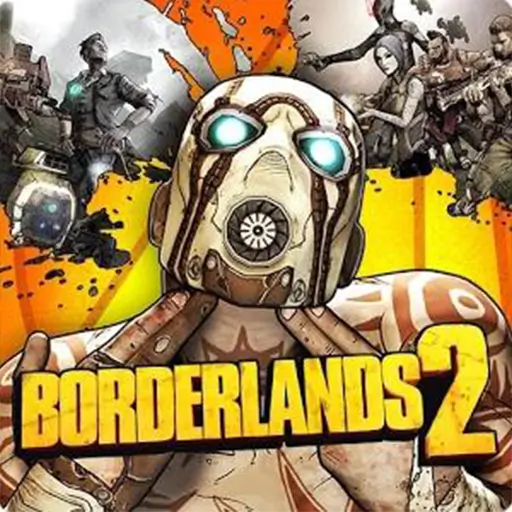
Borderlands 2
Gearbox Software’s Borderlands 2, launched in 2012, refined every element introduced by its predecessor and set a new benchmark for the looter-shooter genre. The sequel amplified the chaotic gunplay with a staggering arsenal of procedurally generated firearms, layered them with punchy recoil and satisfying sound design, and paired the combat loop with a richly comic narrative driven by the unforgettable antagonist Handsome Jack. Its cel-shaded art style embraced bold color palettes and thick inked outlines, making each locale-from the icy wastes of Windshear Waste to the neon-lit halls of Opportunity-feel like a living graphic novel.
The campaign’s pacing is masterful, weaving main quests and side missions into a crescendo that never overstays its welcome. Handsome Jack’s taunting echoes throughout Pandora’s echo-nets, and his sardonic humor contrasts sharply with the desperate plight of the planet’s inhabitants. Major story beats-Flynt’s flaming ship, the tragic fall of Angel, and the climactic vault showdown-are punctuated by cinematic set pieces that keep the adrenaline high while never derailing exploration.
Class diversity sits at the core of replayability. Axton’s Sabre Turret introduces tactical area denial, while Maya’s Phaselock redefines crowd control with elemental augments. Salvador, the Gunzerker, enables dual-wielding madness that shreds bosses in seconds, and Zer0’s Decepti0n introduces stealth and critical hit theatrics. Post-launch additions Gaige and Krieg further expanded possibilities, with Anarchy stacks and buzz-axe rampages bringing fresh meta-builds that still dominate community theory-craft discussions more than a decade later.
Loot variety remains unmatched. Prefixes, elemental rolls, barrel types, and rarity tiers ensure every pickup feels personalized. The discovery of a Double Penetrating Unkempt Harold or a perfectly parted Slagga delivers an adrenaline spike that keeps farming loops addictive. Raid bosses like Terramorphous and Hyperius challenge coordinated squads, rewarding dedication with coveted pearlescent drops.
Four expansive DLC campaigns-Captain Scarlett’s swashbuckling desert heist, Mr. Torgue’s arena of explosive bravado, Sir Hammerlock’s savage hunt, and Tiny Tina’s genre-bending Assault on Dragon Keep-each add tonal variety while deepening the loot pool. Level cap increases, Ultimate Vault Hunter Mode, and overpower levels provide an endgame treadmill that rivals modern live-service titles in staying power.
Co-op synergy elevates the experience; enemy health and loot scales for up to four players, encouraging character-build interplay. Maya’s healing orbs complement Axton’s turret shields, while Salvador’s aggro-soaking allows Zer0 to chain crits from the shadows. Public lobbies, LAN support, and split-screen on consoles ensure the mayhem is accessible to every social setup.
Technical updates via the Handsome Collection remaster introduced high-resolution textures, 60 fps performance modes, and quality-of-life UI tweaks. Even today, its low-poly stylization scales gracefully to 4K, preserving the comic-book vibrancy without aliasing noise.
Borderlands 2’s cultural footprint extends beyond sales records; its meme-laden dialogue, vibrant cosplay community, and speed-running marathons at Games Done Quick keep it firmly in gaming’s collective consciousness. The title’s balanced blend of RPG statistics and FPS reflexes influenced major franchises like Destiny and The Division, cementing its legacy as the definitive Borderlands experience.
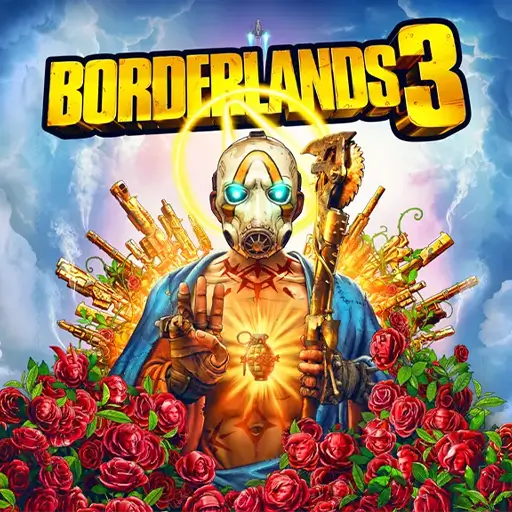
Borderlands 3
Seven years after its predecessor, Borderlands 3 exploded onto the scene in 2019, delivering a kinetic sequel that embraced modern quality-of-life expectations while retaining the irreverent heart of the series. The most immediate upgrade is its slick movement system: mantling, power slides, and slam attacks inject verticality and pace, transforming firefights into three-dimensional ballets of bullets and elemental chaos.
The story expands beyond Pandora, sending Vault Hunters across the galaxy to diverse planets such as the neon megacity of Promethea, the swamplands of Eden-6, and the austere monastery of Athenas. Each biome offers environmental puzzles and enemy ecologies tailored to its aesthetic-Katagawa’s Maliwan troopers use energy shields and drone support, while Eden-6’s jabbers and saurian brutes charge in feral packs.
The villainous Calypso Twins, Tyreen and Troy, parody influencer culture, weaponizing livestreams to recruit bandit fanatics under the Children of the Vault banner. Their dynamic underscores a narrative critique of performative fame and the commodification of violence, blending satire with high stakes as they siphon siren power to awaken the Great Vault.
Class design embraces hybridization. Amara’s elemental fist builds range from ricocheting shotgun siren to crowd-clearing phasecast deity. FL4K’s beastmaster tree allows sniper crit builds with ballistic fade-away or pet-centric strategies featuring gamma burst rakk lobotomies. Moze’s Iron Bear mech feels like a playable Titanfall segment, offering modular hardpoints such as railguns, miniguns, and flamethrowers. Zane’s gadget-stacking clone, drone, and barrier combine to create dizzying synergy loops, rewarding quick-swap cooldown juggling.
With over a billion guns generated through deeper part pools, modifiers like tracking smart bullets, and alt-fire modes-grenade launchers morphing into sniper barrels-loot hoarding reaches delirious heights. Mayhem Modes 1-11 and True Trials escalate difficulty with mutators that spawn death spheres, triple boss health, or amplify elemental splash damage, ensuring endgame viability.
Post-launch, Gearbox delivered seasonal events such as Bloody Harvest and Broken Hearts, plus four substantial DLCs: Moxxi’s Heist of the Hands-some Jackpot captures casino heist tropes in a retro-futurist Las Vegas in space; Guns, Love, and Tentacles marries Lovecraftian horror to a wedding extravaganza; Bounty of Blood injects Spaghetti-Western flair with jet-beast mounts and a brush-stroke aesthetic filter; Psycho Krieg and the Fantastic Fustercluck dives into Krieg’s fractured psyche, twisting level geometry into kaleidoscopic nightmare logic.
Technical fidelity scales with Unreal Engine 4’s physically based lighting, volumetric fog, and screen-space reflections. Cross-play support and reliable netcode broaden the player base, while Twitch ECHOcast extensions let stream viewers interact by spawning chests and voting on buffs, exemplifying modern integrated design.
Though reception noted pacing stumbles and uneven humor, the title’s gun feel, slick traversal, and relentless content cadence earned it multiple “Best Ongoing Game” nominations. Community challenge metas continue to evolve, with speed-runners exploiting slide hops and Moze’s infinite grenade loops to shatter world records.
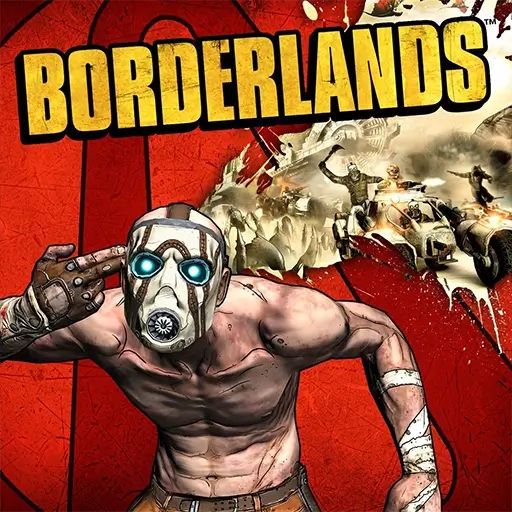
Borderlands
The 2009 original, retroactively subtitled Borderlands, pioneered the fusion of Diablo-style loot progression with first-person shooter mechanics. Its desert wasteland of Pandora featured a Mad Max-meets-Firefly tone, blending diesel-punk scrap architecture with slapstick sci-fi absurdity. Released at the tail end of the seventh console generation, it offered seamless four-player drop-in co-op-an innovation that influenced countless titles.
The four inaugural Vault Hunters-Roland, Lilith, Mordecai, and Brick-each introduced archetypal skill trees that would evolve across sequels. Roland’s Scorpio Turret provided area defense and ammo regeneration, Lilith’s Phasewalk created hit-and-run crowd control, Mordecai’s Bloodwing delivered precision crits, and Brick’s Berserk berserking melee melted armored targets. Although builds were simpler than later entries, they laid the groundwork for intense theory-crafting.
The Borderlands world employed an early form of procedural generation, constructing millions of firearms by mixing manufacturers, barrels, and elemental types. Finding a legendary The Clap Cobra sniper with incendiary rounds or a corrosive Sledge’s Shotgun became watercooler moments that fueled community forums.
Its cel-shaded aesthetic was a late-development pivot that paid off; the thick lines and muted palettes stood out against the era’s gray-brown shooters. Underscored by Jesper Kyd’s twangy guitars and synthetic ambience, Pandora felt simultaneously lonely and ripe for adventure.
DLC expansions-The Zombie Island of Dr. Ned, Mad Moxxi’s Underdome Riot, The Secret Armory of General Knoxx, and Claptrap’s New Robot Revolution-extended the level cap, introduced drivable racers, and delivered some of the franchise’s funniest writing, particularly the self-aware deconstruction of quest clichés in Dr. Ned’s zombie satire.
While the campaign’s ending twist of an empty vault drew criticism, it seeded lore threads about Eridian aliens and Guardian constructs that would blossom in sequels. Retrospectively, Borderlands’ relative austerity compared to later titles underscores how groundbreaking its core loop was; even basic mechanics like two-weapon swap limit fostered tactical decision-making that many modern shooters emulate.
The 2019 remaster brought texture overhauls, mini-map integration, and new legendary drops, allowing newcomers to experience the progenitor with modern conveniences while preserving the feel of its clunky, charming gunplay.
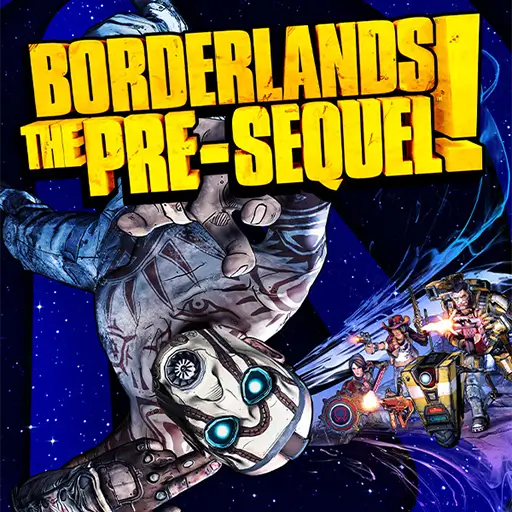
Borderlands The Pre-Sequel
Borderlands The Pre-Sequel (2014) slots narratively between the first two mainline games, chronicling Handsome Jack’s ascent from witty Hyperion programmer to tyrannical dictator. By setting the adventure on Pandora’s moon, Elpis, Gearbox (with co-developer 2K Australia) leveraged low-gravity mechanics to revolutionize traversal. Oxygen kits (OZ kits) enable double-jumps, mid-air strafes, and slam attacks that emit elemental shockwaves, transforming vertical combat into a zero-G playground.
Playable protagonists-Athena the Gladiator, Wilhelm the Enforcer, Nisha the Lawbringer, and Claptrap the Fragtrap-are former NPCs or bosses from earlier lore, offering fans a fresh narrative perspective. Each skill tree plays with the new physics: Athena’s Aspis shield absorbs damage then hurls it back like a ricocheted comet; Nisha’s Showdown auto-targets enemies in rapid duelist fashion; Wilhelm gradually cyber-augments his body, visually marking his descent into mechanization.
Laser and cryo elemental weapon types debut here, freezing foes into brittle sculptures that shatter under critical hits. The low-gravity firefights look like balletic firefights, moon-dust plumes billowing around ricocheting lasers.
Despite criticisms of recycled assets and a smaller scope, The Pre-Sequel’s narrative pays off with tragedy as players unknowingly facilitate Jack’s moral collapse. The endgame challenge Holodome Onslaught and the Claptastic Voyage DLC-set inside Claptrap’s corrupted firmware-deliver inventive arenas and mind-bending digital landscapes, showcasing writing that oscillates between pathos and absurdism.
Mechanically, the Pre-Sequel introduces grinder crafting, letting players combine lower-rarity guns into improved gear, an early precursor to loot-re-roll systems later codified by Destiny and Division. Reinforced by ice physics, oxygen management, and environmental hazards like lava and laser grids, each combat encounter demands spatial awareness beyond bullet exchanges.
Its legacy lies in experimenting with traversal and offbeat storytelling, proving the franchise could push gameplay boundaries without abandoning its crunchy loot core.
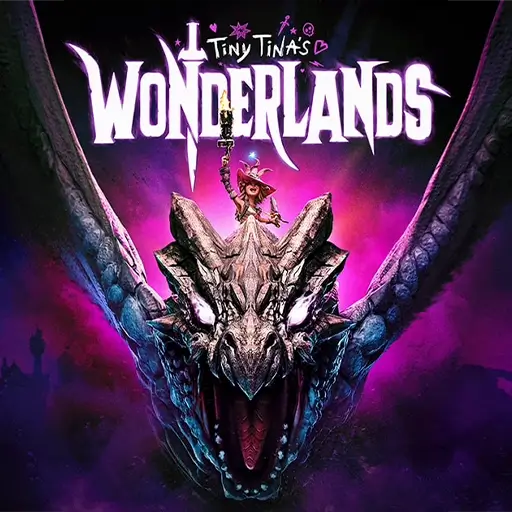
Tiny Tina’s Wonderlands
Released in 2022, Tiny Tina’s Wonderlands reframes Borderlands chaos through a high-fantasy lens, transforming looter-shooter DNA into a tabletop-inspired romp. The campaign exists as an in-universe Bunkers & Badasses RPG, narrated by the mercurial Tiny Tina, whose improvisational rule-bending constantly reshapes the overworld map with sudden castles, candy clouds, and board-game random encounters.
Character creation replaces fixed Vault Hunters, letting players combine two multiclass archetypes such as Stabbomancer, Brr-zerker, Spore Warden, Graveborn, Spellshot, and Clawbringer. Each class offers an active skill and passive trees, with the secondary class unlocked early-empowering buildcraft freedom unprecedented in the series. Spells supplant grenades, functioning as cooldown-based wizardry: meteor showers, ice spikes, or health-leeching dark magic eruptions.
Loot expands to melee weapons-enchanted blades, hammers, and axes-with unique combos and elemental infusions. Guns remain central, now sporting crossbows, flintlock pistols, and spell-shot cannons. Rings, amulets, and armor confer RPG-esque stats like critical chance and ability cooldown, reinforcing the D&D motif.
The structure features a tile-based overworld where random combat shrines, dice rolls, and hidden pathways reward exploration outside linear missions. Chaos Chamber roguelike dungeons unlock post-campaign, mixing procedural arenas with buff/curse modifiers that escalate loot quality through risk-reward wagering.
True to Borderlands humor, Wonderlands melds anachronistic jokes-assault rifles inscribed with eldritch glyphs that brag about integrating Excel macros-with heartfelt camaraderie between party members Valentine and Frette. Andy Samberg, Wanda Sykes, and Will Arnett lend star-studded voice performances, elevating cutscenes with comedic timing.
Post-launch Mirror of Mystery episodes add bosses like the Sand Witch and Shattering Spectreglass, bolstering Chaos Levels. Quality-of-life patches introduced inventory filters and skipable intro cinematics, reflecting Gearbox’s responsiveness.
Tiny Tina’s Wonderlands demonstrates the franchise’s flexibility, translating gun-centric gameplay into a whimsical epic that both lampoons and celebrates fantasy tropes while preserving the tight time-to-killing fun fans expect.
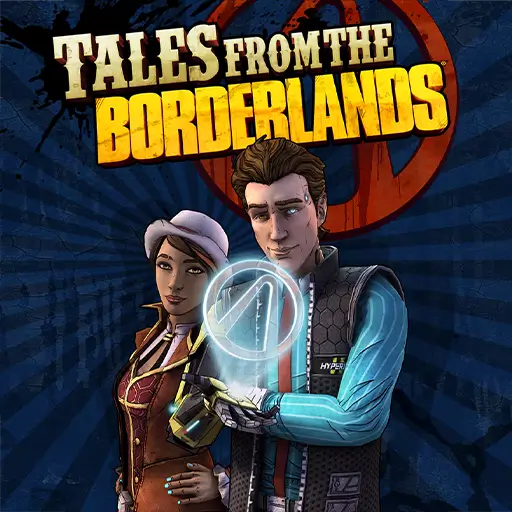
Tales from the Borderlands
Telltale Games’ 2014 episodic narrative adventure Tales from the Borderlands trades gunplay for dialogue-driven storytelling, proving the universe’s comedic and emotional depth beyond bullet ballets. Players alternate between hyperconfident con artist Fiona and awkward Hyperion middle manager Rhys, whose cybernetically enhanced adventures span five episodes packed with branching choices.
The cel-shaded art style aligns seamlessly with the mainline series, while Telltale’s choice-and-consequence system injects tension into corporate negotiations, vault hunts, and vehicular chases. QTEs punctuate set pieces-dodging Atlas death-drones atop a speeding caravan, commanding Loader Bot to perform interpretive dance, or fist-bumping Vaughn after a catastrophic explosion.
The strength of Tales lies in its characterization. Secondary figures like the stoic assassin Athena, the bombastic August, and the ostentatious Vallory receive nuance, while newcomer Sasha grounds the high-stakes hijinks with pragmatic skepticism. A surprise cameo by Handsome Jack’s AI ghost explores themes of power corruption and identity manipulation, culminating in moral dilemmas that echo across the Borderlands timeline.
Humor blossoms through visual gags and sharp writing-Rhys bragging about his fashionable robotic arm even as it malfunctions mid-monologue-yet the story never shies from poignancy. Episode Five’s sacrificial choice in the Vault of the Traveler delivers an emotional gut-punch that rivals triple-A climaxes.
Composer Jared Emerson-Johnson’s eclectic soundtrack, featuring electro-swing, western twangs, and synth-rock, underscores opening montages that recap previous episodes with music-video flair. These sequences became fan favorites, often cited as Telltale’s most stylish title cards.
Tales’ influence persisted, shaping the lore of Borderlands 3 by introducing Atlas CEO Rhys and sanctuary planet Promethea. It exemplifies transmedia storytelling, showing how narrative-centric spin-offs can enrich a loot-shooter franchise by fleshing out civilian perspectives amid vault raider chaos.
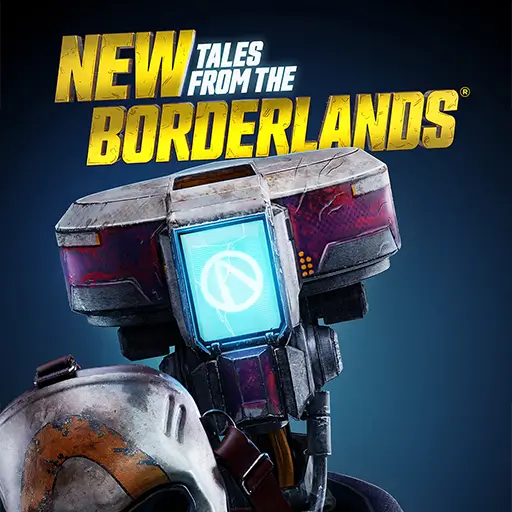
New Tales from the Borderlands
Released in 2022, New Tales from the Borderlands inherits the narrative torch with a fresh protagonist trio: pacifist scientist Anu, street-smart hustler Octavio, and frogurt-obsessed frozen-yogurt vendor Fran. Developed internally by Gearbox, the sequel maintains Telltale’s branching structure while updating cinematography with Unreal Engine 4’s dynamic lighting and cinematic camera work.
The story unfolds on Promethea in the aftermath of Maliwan’s siege, exploring themes of late-stage capitalism, corporate exploitation, and the enduring hope of small businesses. Choices sway relationships, such as encouraging Octavio’s get-rich-quick schemes versus supporting Anu’s altruistic invention that eliminates gun violence (ironic within a gun-glorifying universe).
Combat QTEs are more dynamic, integrating mini-games like rhythm-based shield timing and multi-path stealth infiltrations. Fran’s hover-chair doubles as a heavy-weapon turret, delivering slapstick carnage amidst heartfelt moments of disability representation.
A collectible vaultlander figurine meta-game lets players duel NPCs in AR battle arenas, a witty nod to real-world toy culture and the franchise’s penchant for self-referential absurdity. The finale introduces a moral quandary revolving around an ancient Eridian healing technology, challenging players to weigh personal loss against planetary salvation.
Though critical reception was mixed-citing pacing dips and uneven transitions between humor and gravitas-its heartfelt character arcs and numerous endings rewarded replay. The title underscores Gearbox’s commitment to expanding Borderlands beyond gun looting, nurturing emotional investment in its misfit citizens.
 All rights reserved © 2025
Comments
You need to be logged in to leave a comment. Sign in or sign up