Genryusai Shigekuni Yamamoto
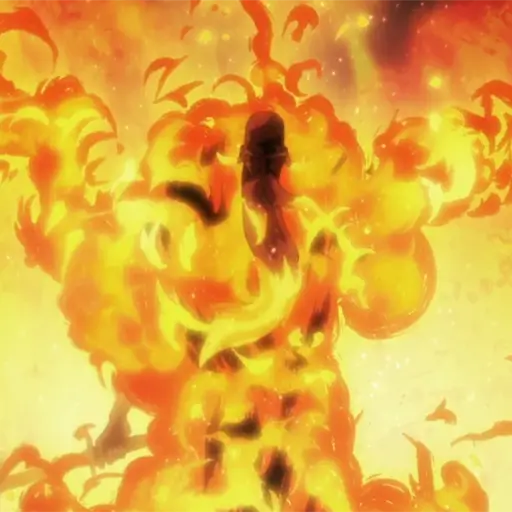
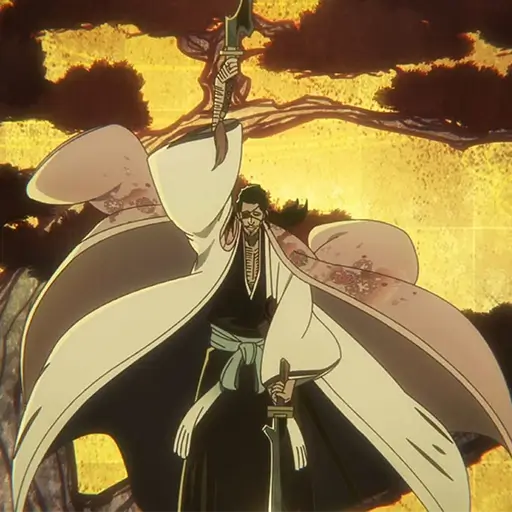
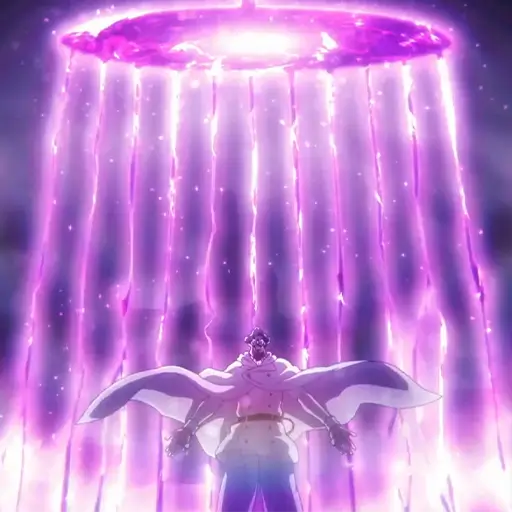
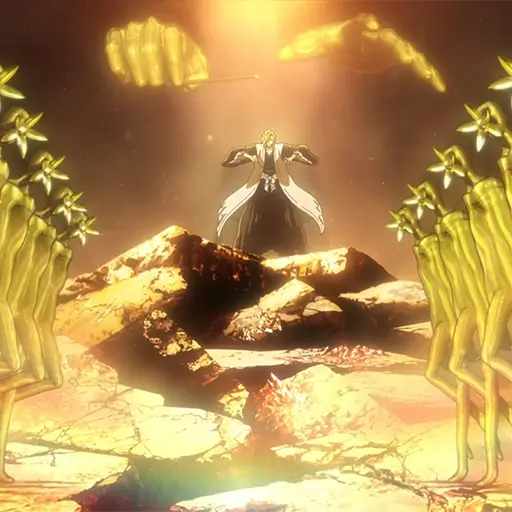
Genryusai’s Zanka no Tachi is frequently described by Central 46 historians as the primal flame that first tempered Soul Society itself. When the venerable commander shifts the guardless sword to Bankai, every mote of fire that once raged across the battlefield is vacuum-sealed into the edge of the blade. The result is not a blazing inferno but a blade so hot that light cannot properly scatter from its surface; the sword appears dull, even lifeless, yet the surrounding air snaps and distorts as moisture and spiritual particles sublimate into nothing. Average captains experience a feeling of sudden drought, then a ringing in the ears as the water in their eardrums boils away. Spiritual threads hovering inches from the steel ignite into salt-white sparks before being erased entirely, leaving a charred vacuum that robs incoming kidō of cohesion. Yamamoto himself appears unperturbed, yet every bone in his body is under siege from the impossible heat he is forcing to obey his will.
The Bankai splits into four cardinal techniques that mirror the sun’s daily journey. Zanka no Tachi, Higashi: Kyokujitsujin funnels the sun-hot fire into an edge thinner than human hair; whatever that edge touches is cut apart on the atomic scale, then reduced to motes of scorched ash. Zanka no Tachi, Nishi: Zanjitsu Gokui does not extend the sword’s reach but instead wraps its master in a cloak of compressed heat measured in the tens of millions of degrees. Curiously, the mantle shines with no visible flame-wavelengths that would normally reveal incandescent plasma are red-shifted straight out of the human visual range, turning the captain into a hazy silhouette. Zanka no Tachi, Minami: Kaka Jūmanokushi Daisōjin calls forth the charred husks of Yamamoto’s past victims; they rise as skeletal warriors bound by drifting cinders and fight until they crumble, their touch capable of incinerating reiatsu defenses as easily as flesh. Finally, Zanka no Tachi, Kita: Tenchi Kaijin channels every last ember into a thrust that rips the horizon open like parchment; the road it traces remains glassy and black for centuries, immune even to Division Twelve’s restoration enzymes.
During the Thousand-Year Blood War Yamamoto activated the Bankai for less than five minutes, yet that span of time melted strata three kilometers below First Division Headquarters, desiccated the Seireitei sky into a shimmering heat haze, and forced Emperor Yhwach to admit that he could not defeat the old man without first stealing the sword outright. Kido mathematicians later estimated that a single sustained hour of Zanka no Tachi would evaporate the entirety of Soul Society’s inland seas, triggering a planetary-scale imbalance in the cycle of souls. For that reason the commander keeps the sword sheathed in ordinary engagements, trusting in centuries of kendō mastery to carry the day. Of all Bankai ever registered, Zanka no Tachi alone is classed as a doomsday weapon whose prolonged use would threaten the cosmological constant of the Bleach universe.
Ichigo Kurosaki
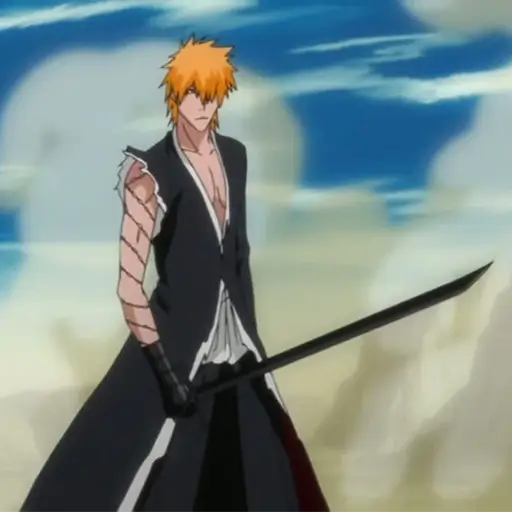
Ichigo’s fully restored Bankai represents a perfect alloy of Shinigami, Quincy, Hollow and Fullbringer essences. The dual-sword Shikai-one broad cleaver embodying Hollow power and one shorter katana embodying Quincy heritage-collapses into a single crescent-edged blade the instant he cries “Bankai.” Reishi within several kilometers bends toward him like iron filings to a magnet, and for a moment the skyline of the Royal Palace ripples as if space itself is adjusting to the new spiritual mass. Witnesses describe the sensation as standing at the bottom of an ocean trench, every sense warped by pressure so dense that even thought arrives a heartbeat late. The blade’s finish remains matte black, yet tiny silver vein-lines flicker across its surface, hints of Quincy Blut Vene knitting themselves into the weapon rather than coating Ichigo’s skin.
The Bankai provides three broad abilities. First comes raw speed: Yoruichi’s combat data notes that Ichigo’s peak acceleration in Bankai exceeds even her Shunko Raijin Senkei, allowing him to cross the gap from Palace to Seireitei in a single heartbeat. Second is layered durability; Hollow high-speed regeneration meshes with Quincy Blut Vene to form a living suit of mail that thickens each time it is breached, recycling damage into bursts of propulsion. Third is attack amplification: the familiar Getsuga Tenshō condenses until it resembles a surgeon’s scalpel of black-blue light. By overlaying two perpendicular slashes Ichigo forges Getsuga Jūjishō, a cross-shaped wave whose internal pressure rivals Yamamoto’s Shikai wildfire. Because the wave is rich in Hollow density, it severs existential seams, allowing the attack to penetrate spatial-warping barriers that normally deflect kido.
Even broken, Ichigo’s Bankai terrifies gods. When Emperor Yhwach shattered the blade with The Almighty, jagged fragments still emitted enough spiritual pressure to crack the crystalline foundations of the Wahrwelt. In the final duel, with Uryu’s silver arrowhead temporarily negating Yhwach’s future sight, Ichigo’s Bankai slice cleaved through the Soul King-empowered monarch and split the Auswählen storm from crown to heel. Supplemental notes by Royal Guard archivists record that each time Ichigo invokes Bankai the World Soul registers a ripple identical to the “pulse” measured when the Soul King first chained order from chaos; scholars interpret this as evidence that Kurosaki’s blade functions as a temporary keystone, shoring up reality even as it tears down his enemies.
Kenpachi Zaraki
No official name exists for Kenpachi’s Bankai; the Warden’s Office files simply label it “Release - Division Eleven Captain.” Upon activation the eyepatch that normally gorges on Zaraki’s spiritual pressure disintegrates, revealing blood-red sclera. Two small horns erupt from his forehead, and the jagged edge of Nozarashi contracts into a crude cleaver so heavy that the flagstones beneath his feet crumble under its weight. The change is more than cosmetic: every pulse of Zaraki’s reiatsu compresses into kinetic potential, multiplying the strength and speed of each swing until surrounding Garganta portals wobble like disturbed ponds. According to Hitsugaya’s post-battle calculations, a single casual strike produced a shockwave comparable to the kinetic energy of Gremmy Thoumeaux’s meteor before impact.
The Bankai possesses no subtleties-no named techniques, no elemental manipulation. What it grants instead is unfiltered carnage. Zaraki’s muscles knit around newly formed spiritual tendons, turning him into a berserker who can leap city blocks in a blink, carve battlefield-wide fissures, and shrug off injuries that would pulp lesser captains. Observers claim that blood seeping from the self-inflicted cracks in his forearms evaporates before it can hit the ground, vaporized by the friction of sheer momentum. Crucially, Zaraki’s already prodigious combat instinct becomes downright bestial; his grin widens, speech slurs, and he appears to act on scent and sound alone-a living calamity that cannot distinguish friend from foe.
The result is devastating on any who stand before him. Gremmy’s imagined meteor-advertised to possess enough mass to obliterate Seireitei-was splintered by a single vertical slash. Gerard Valkyrie, empowered by the Soul King’s heart and swollen to a size that dwarfed entire districts, lost an arm, then a torso segment, then his head to Kenpachi’s blows, each cut accompanied by a cannon-blast of compressed air. Analysts from Division Twelve warn that, because the Bankai overwhelms Zaraki’s rational thought, prolonged use might literally tear his body apart from the inside; bones hardened by reiatsu can still fracture when the force applied exceeds the tensile strength of soul-forged steel. Yet in the handful of minutes he maintains control, there may be no single entity-save perhaps Yhwach or Yamamoto-who can trade blows with him and remain intact.
Retsu Unohana
The woman once feared as Yachiru Unohana wields Minazuki, a Bankai that dissolves the boundary between healing and murder. Where the Shikai manifests a gentle giant manta capable of swallowing and mending allies, the Bankai liquefies sword, arm, and surrounding reishi into a churning sea of vermillion acid. Every droplet bears Unohana’s signature, meaning she can detonate or soothe it at will. In practical terms the fluid melts flesh and reiatsu alike, yet the instant a limb is reduced to steaming slurry it can be re-knitted, nerve by nerve, should the captain deem the lesson incomplete. Zaraki endured hundreds of such deaths, each resurrection accompanied by excruciating clarity as the acid stitched his pain receptors back together. The process refined his dormant combat sense until he could finally challenge his mentor as an equal.
Minazuki’s caustic sea extends only as far as Unohana’s will. She may compress it into a spinning drill around her slim blade for precision piercing, or flood a training hall ankle-deep to hinder mobility. Defensive applications are equally fearsome; a wall of Minazuki slurry can consume incoming cero blasts and reconstitute them as shards that explode on a different frequency, effectively turning enemy ammunition into friendly artillery. None of this requires incantation-the Bankai responds to the captain’s heartbeat, pulsing in sympathy with her centuries-honed killer intent.
Yet the greatest terror lies in Minazuki’s resurrection loop. Continuous cycles of death and rebirth grind away at an opponent’s sanity, burying them under traumatic memory until they can no longer distinguish past from present. Division Twelve field manuals classify the psychological fallout as Spiritual Post Traumatic Echo, a condition that leaves even hardened fighters catatonic for weeks. Should Unohana choose not to revive her victim, the acid’s pH collapses cellular bonds so totally that not even Mayuri’s regenerative serums can retrieve a DNA sample. Little wonder that Central 46 once legislated an entire article forbidding the captain from drawing her Bankai within three districts of civilian housing.
Shunsui Kyōraku
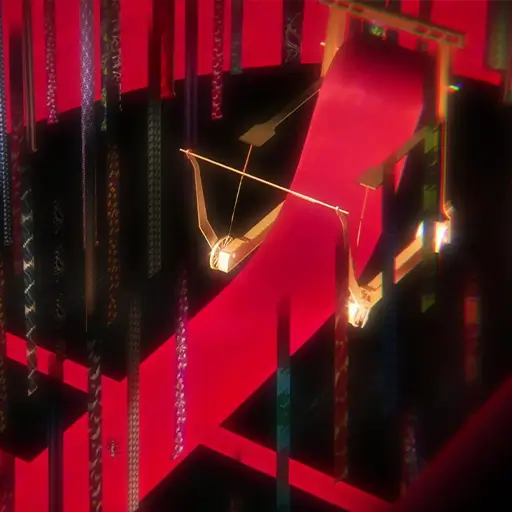
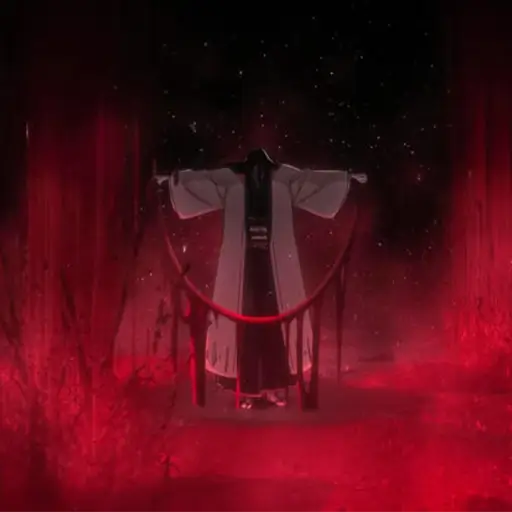
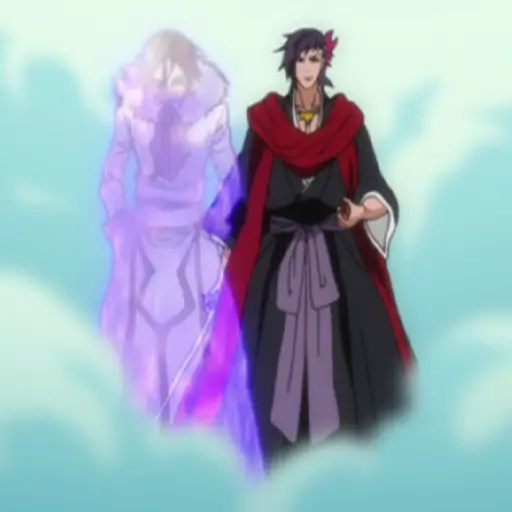
Katen Kyōkotsu: Karamatsu Shinjū is less a technique and more a stage play pressed onto reality. The moment the double sabers click together, ambient light dims as though sunset has arrived, and the battlefield becomes a theater draped in tattered shōji screens. Shunsui narrates no commands; instead, the Bankai advances through four acts that unfold according to their own melancholic script. Act One externalizes the captain’s wounds by mirroring them onto his enemy-old scars reopen, recent cuts blossom anew-forcing the opponent to taste every pain Shunsui has ever endured. Act Two submerges both parties in a phantom sea whose depth is dictated by fear; each inhalation draws frigid black water into the lungs until breath becomes a memory. Act Three dries the sea away, leaving a cracked plain where the combatants exchange finger-gun shots; the first to imagine the bullet striking loses arterial blood in reality.
By the time Act Four begins, reiatsu within the domain is drained to the point of organ failure. A pale maiden draped in pine-patterned kimono appears behind the target, embracing them in a fatal wedding that robs them of warmth, color, and spiritual cohesion. Lille Barro’s intangible X-Axis beams dissolved under this final act, proving that conceptual defenses are useless once the story decrees a tragic ending. The Bankai’s power is so indiscriminate that Shunsui refuses to activate it around allies; Nanao once begged her captain to promise he would never stage the play in Seireitei, lest the division’s own families be cast as unwilling choir.
Analysts note that Karamatsu Shinjū manipulates narrative weight rather than elemental vectors. It attacks the very idea of victory, ensuring the opponent’s part in the tale concludes in despair. Countermeasures are theoretical at best: one must either force Shunsui outside the defined stage area or possess a reality-overwriting power stronger than his own. Because only Soul King-tier entities meet that criterion, Shunsui’s Bankai remains one of the most feared trump cards among the Gotei, invoked only when the alternative is total annihilation.
Kisuke Urahara
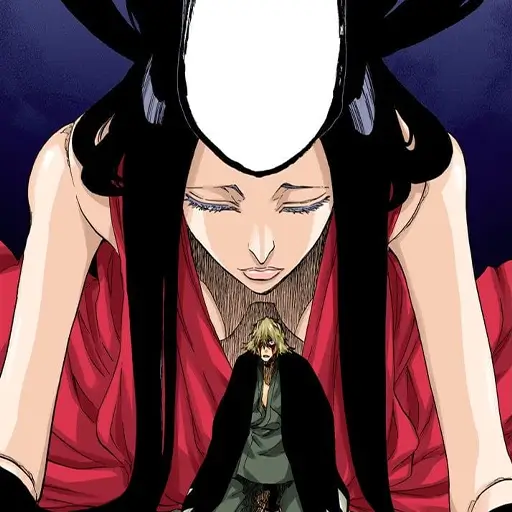
Kannonbiraki Benihime Aratame is a surgeon’s dream and a foe’s nightmare. When Urahara calls Bankai, a colossal crimson-robed woman unfurls behind him, her arms spread like temple gates. Thousands of thread-thin beams of reishi stream from her sleeves, weaving a lattice that encloses whatever space the captain designates as his operating theater. Inside this lattice every object-solid, liquid, or spiritual-can be pulled apart into constituent data, rewritten, and sewn together again to Urahara’s liking. He has reattached his own severed limbs, restored Yoruichi’s fragmented spiritual core mid-combat, and converted ambient rubble into organ replacement parts in seconds.
The Bankai is not restricted to healing. Urahara can mutate toxins into antidotes, then reverse-engineer the antidotes back into improved toxins targeted at an enemy’s specific genetic markers. He can collapse reishi around an opponent’s heart, converting the pressure sleeve into a detonator primed to rupture at his command. Against Askin Nakk Le Vaar, whose Deathdealing adapted to poisons by recalibrating lethal dose thresholds, Urahara simply rewired the Quincy’s blood composition faster than the adaptation could trigger, defanging the ability altogether. Defensive options are equally versatile: by super-compressing lattice threads into solid panels he creates shields tough enough to shrug off level-ninety kidō without chanting.
The price is stamina. Each rewrite consumes spiritual pressure proportional to the complexity of the edit; constructing a replacement lung costs a trifle, while re-sequencing a Pocket Dimension’s fabric to counter spatial hacks nearly emptied Urahara’s reserves after only two iterations. Still, as long as the captain can whisper, “I’ve prepared three hundred years for this,” enemies know the battlefield has already been reduced to components waiting for his hand to guide the needle.
Shinji Hirako
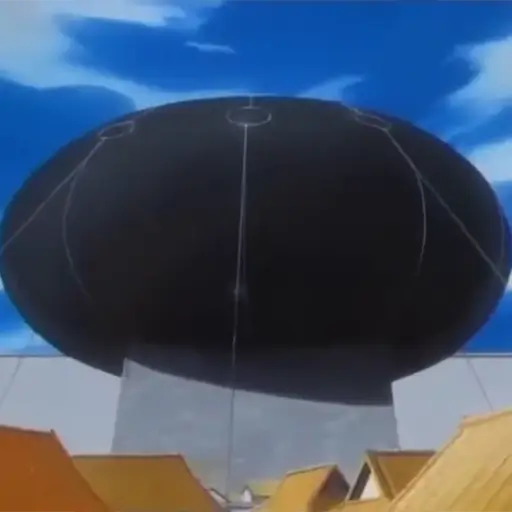
Shinji’s Sakashima Yokoshima Happō Fusagari is an arena of inversion. At Bankai release, stylized kanji spread across a spherical membrane that blooms up to three hundred meters in radius. Inside, the concept of ally and enemy flips with merciless precision: comrades perceive Shinji as the greatest threat in existence, while foes see him as a cherished partner. Instinct overrides rational thought, forcing everyone to act on the false premise even if they consciously recognize the trap. Because the inversion digs deeper than sensory illusion, counters such as blindfolding or ear-plugs prove useless.
The effect extends to spiritual phenomena. Kidō nets cast to restrain Shinji snake back around their origin casters; Quincy Heilig Pfeil curve mid-flight and perforate the bowman’s own lungs. Hollow warcries fracture into sonic daggers that shred allied masks rather than enemy flesh. The only way to nullify the field is for its owner to deactivate it or for every being inside to die. Consequently the Bankai is unusable in standard sorties; Division Five archives note that Shinji has logged fewer than four activations in over a century, each reserved for riot control against overwhelmingly hostile crowds.
The Light-Novel “Can’t Fear Your Own World” recounts Shinji releasing the Bankai to quell a thousand-mask Hollow uprising. In less than four minutes the entire horde slaughtered itself in frenzied confusion. Survivors-mostly Arrancar with near-zero emotional bandwidth-reported hearing their own voice commanding attacks that their bodies executed without consent. Psychological fallout lasted months. With no known defense except absolute indifference, Happō Fusagari ranks among the deadliest crowd-control powers ever documented.
Rukia Kuchiki
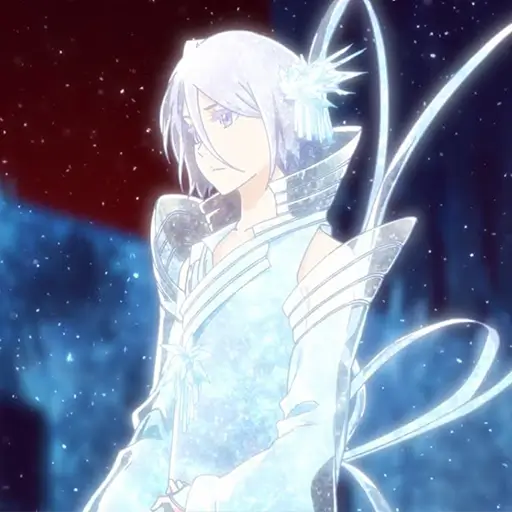
Hakka no Togame is the definition of absolute zero applied to swordsmanship. Upon activation Rukia’s body crystallizes into frost so cold that molecular vibration halts; light refracts sluggishly through the air, turning the battlefield into a pale, silent tableau. Anything her blade or aura touches reaches temperatures measured in negative Kelvins only possible because spirit particles ignore classical thermodynamics. Stone instantly fractures, metals snap like dried twigs, and even flames gutter out, the combustion reaction robbed of thermal energy before it can begin.
Maintaining such stasis is lethal even to its wielder. Rukia practices a timed breathing-hakuda rhythm that raises her internal temperature an instant before irreversible cell death occurs, shattering the ice shell in a blinding burst that marks the safe termination window. Failure to exit within that heartbeat would freeze her cognitive processes forever. The Bankai’s radius grows with every pulse of spiritual pressure, so a protracted duel risks engulfing allies, prompting Rukia to favor finishing strikes that end engagements in one movement.
Against Äs Nödt, whose fear contagion paralyzed captains, Hakka no Togame crystallized the Quincy’s very nerves, preventing synaptic signals from completing their circuit. Laboratory measurements taken afterward found localized temperature dips of minus 273.150 Kelvin, a conceptual reading that forced Division Twelve to rewrite several thermodynamic models. If released at full maturity, analysts posit the Bankai could decelerate the spiritual motion underpinning Shinigami immortality, effectively freezing souls out of existence.
Toshiro Hitsugaya
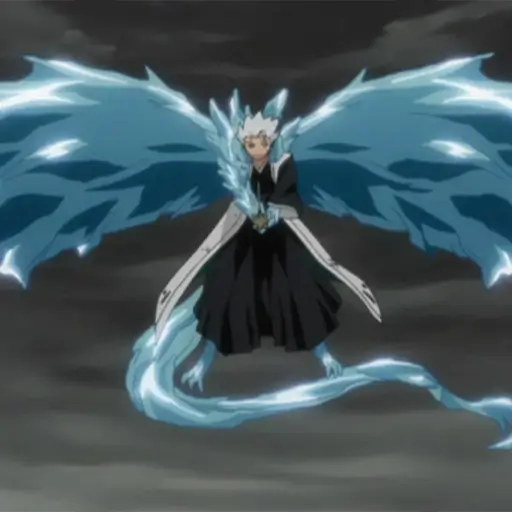
The adult form of Daiguren Hyōrinmaru elevates Captain Hitsugaya from prodigy to winter incarnate. When the three ice flowers at his back fully bloom, his physique ages to adulthood and every water molecule within two kilometers falls under absolute jurisdiction. He can lower or raise melting points at will, meaning he can freeze lava without cooling it or liquefy glaciers without heating them. The matured Bankai yields mirror-bright wings that regenerate by drawing moisture straight from the air, allowing sustained flight and continuous repair even in arid conditions.
Signature techniques include Gunjo Rakuyo, which freezes spiritual energy rather than matter, converting cero beams into crystal petals, and Hyoten Hyakkaso, a blizzard of one hundred white blossoms that settle on the target before detonating into radial frost explosions. A more recent addition, Shikai: Daikōrō, seeds microscopic ice crystals inside reishi clusters, letting Hitsugaya detonate enemy armor from within once he reverts to Shikai after Bankai stamina expires.
During the fight with Gerard Valkyrie, adult Hitsugaya froze the giant’s divine muscle fibers faster than The Miracle could rewrite its probability of survival, leaving the titan brittle enough for Byakuya’s petals to slice cleanly through. Post-battle atmospheric readings indicated a twenty-degree drop across fourteen districts, persisting for half an hour even after the Bankai ceased. Division One meteorologists concluded the captain had temporarily forced a micro-ice age, a testament to the scale achievable once youthful limitations melt away.
Byakuya Kuchiki
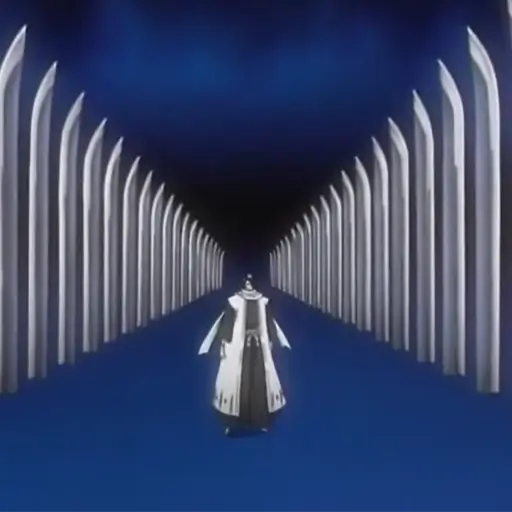
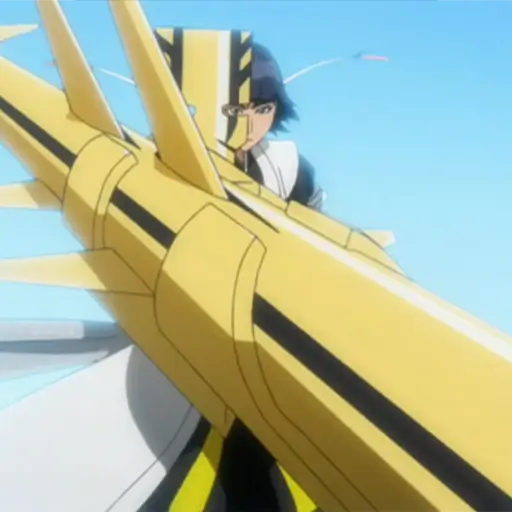
Senbonzakura Kageyoshi weds aristocratic grace to terrifying area control. Upon Bankai the sword sinks into the ground, blooming into two ranks of massive blades that shatter into millions of petal-sized fragments. Each fragment is razor-edged; together they form a roiling pink storm that obeys Byakuya’s thought at near-Shunpo speed, overwhelming foes who cannot track thousands of attack vectors simultaneously. Because the petals vibrate at frequency bands that scramble spiritual perception, even experienced fighters struggle to identify real petals amid afterimages.
The Bankai possesses specialized modes. Gokei compresses the entire cloud into a swirling sphere, multiplying slicing density until escape is statistically impossible. Senkei recalls the petals into three thousand identical swords orbiting Byakuya in concentric rings; each can be fired as a thrust or wielded in hand, transforming the noble into a one-man phalanx. Shukei Hakuteiken condenses all blades into a single crystal saber whose cutting potential approaches Kenpachi’s raw power while retaining the precision of a surgeon.
After receiving Royal Guard healing, Byakuya unlocked petal rigidity control, allowing him to harden fragments into bullet-proof shields or flatten them into reflective panels capable of bouncing light-based ceros. During the later stages of the Blood War he severed Gerard Valkyrie’s ankle-an appendage thicker than a cathedral pillar-underscoring the augmented macro-scale bite of the petals. Tactical dossiers place Senbonzakura Kageyoshi among the most balanced Bankai: no glaring weaknesses, infinite reconfiguration potential, and a master swordsman’s intelligence guiding every shard.
Renji Abarai
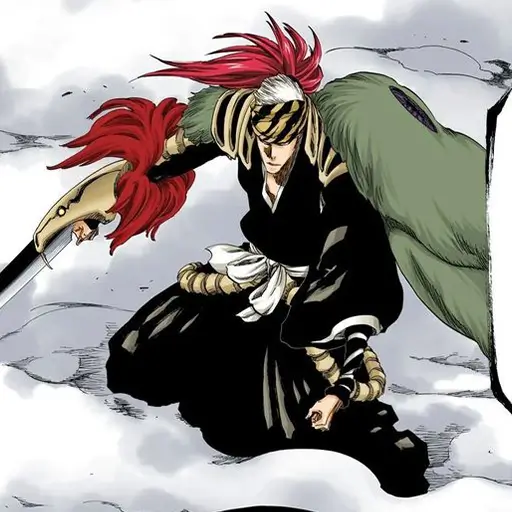
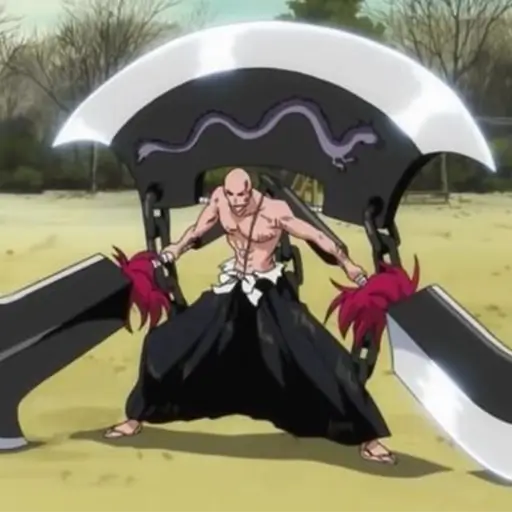
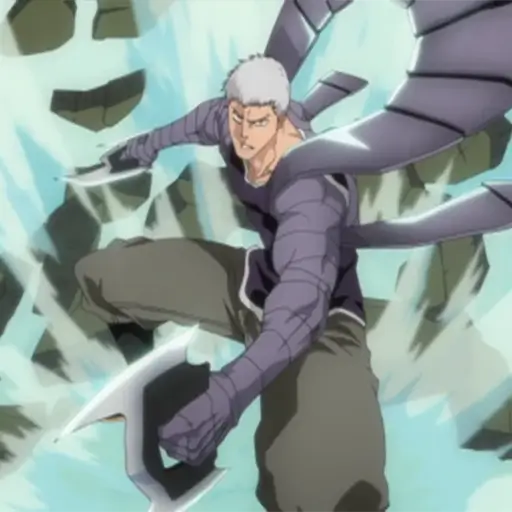
Renji’s Sōō Zabimaru manifests only after he recognizes the true name of his Zanpakutō. A gigantic skeletal serpent coils around his arm, its skull fused to an uneven cleaver that can stretch and retract like a segmented whip. The hollow spine can detach individual vertebrae as autonomous striking heads, turning Renji’s reach into a three-dimensional minefield. Every swing piles centrifugal force into the skull, enabling bullet-like thrusts that pierce hierro and steel alike.
The trump card is Orochiō, wherein the serpent inhales a luminous charge of reiatsu, compresses it inside the skull, and fires a fanged shell that detonates after penetration, churning enemy innards into confetti. Defensive maneuvers involve wrapping the tail in a spiral shield; each segment absorbs impact by flexing through the gaps, then rebounds with stored kinetic energy. Because Zabimaru’s spirit consists of both baboon and snake halves, the Bankai can split its offensive and defensive functions, multitasking in ways most single-spirit blades cannot.
Against Mask de Masculine the Bankai overpowered star-empowered punches that had staggered a Bankai-less Renji minutes earlier. Later, the serpent’s jaw bit down on Gerard Valkyrie’s wrist, halting a swing that would have pulverized injured Shinigami. Division Eleven analysts suggest that, given time, Renji could develop multi-shell salvos that blanket an entire warfront-a prospect that cements Sōō Zabimaru’s future as Division Six’s heavy artillery.
Sajin Komamura
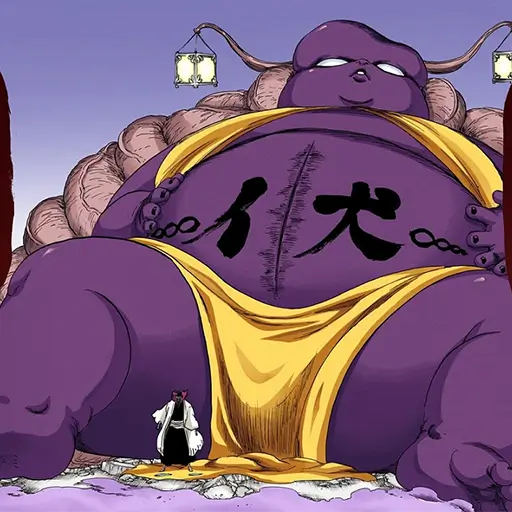
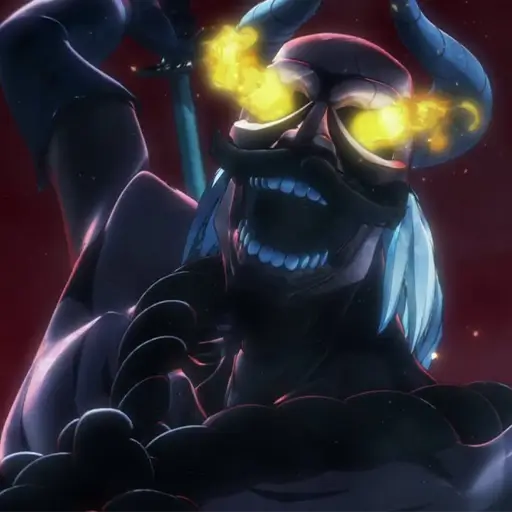
Kokujō Tengen Myō’ō: Dangai Jōe is both a Bankai and a karmic metamorphosis. By offering his heart in a clan ceremony, Komamura forfeits human form, becoming a giant living suit of empty armor. Unlike the original Kokujō Tengen, the Dangai Jōe avatar cannot be destroyed; damage applied to the armor reflects onto Komamura’s now-immortal soul, which is sheltered from harm for as long as the ritual’s spiritual chain remains intact. Every punch lands with seismic force, capable of cracking mountains, and each step drags gale-force winds across the ground.
The invulnerability lasts only until Komamura’s borrowed karma exhausts. Once the limit passes he loses both Shinigami powers and humanoid shape, reverting to a plain wolf. During that narrow window, however, he can match miracle-enhanced entities blow for blow. He endured Gerard Valkyrie’s titanic sword strokes that had previously shattered Kenpachi’s Bankai guard, then countered with hammer-fists that splintered divine bone. The harvest is bittersweet: victory costs him his captaincy, yet guarantees Division Seven’s survival.
The Bankai stands as a testament to Komamura’s resolve-armor clad not in steel but in the will to sacrifice everything for duty. Analysts classify Dangai Jōe as a strategic weapon of last resort: dramatically powerful, brutally straightforward, and burdened with a price no conventional soldier would pay.
 All rights reserved © 2025
Comments
You need to be logged in to leave a comment. Sign in or sign up